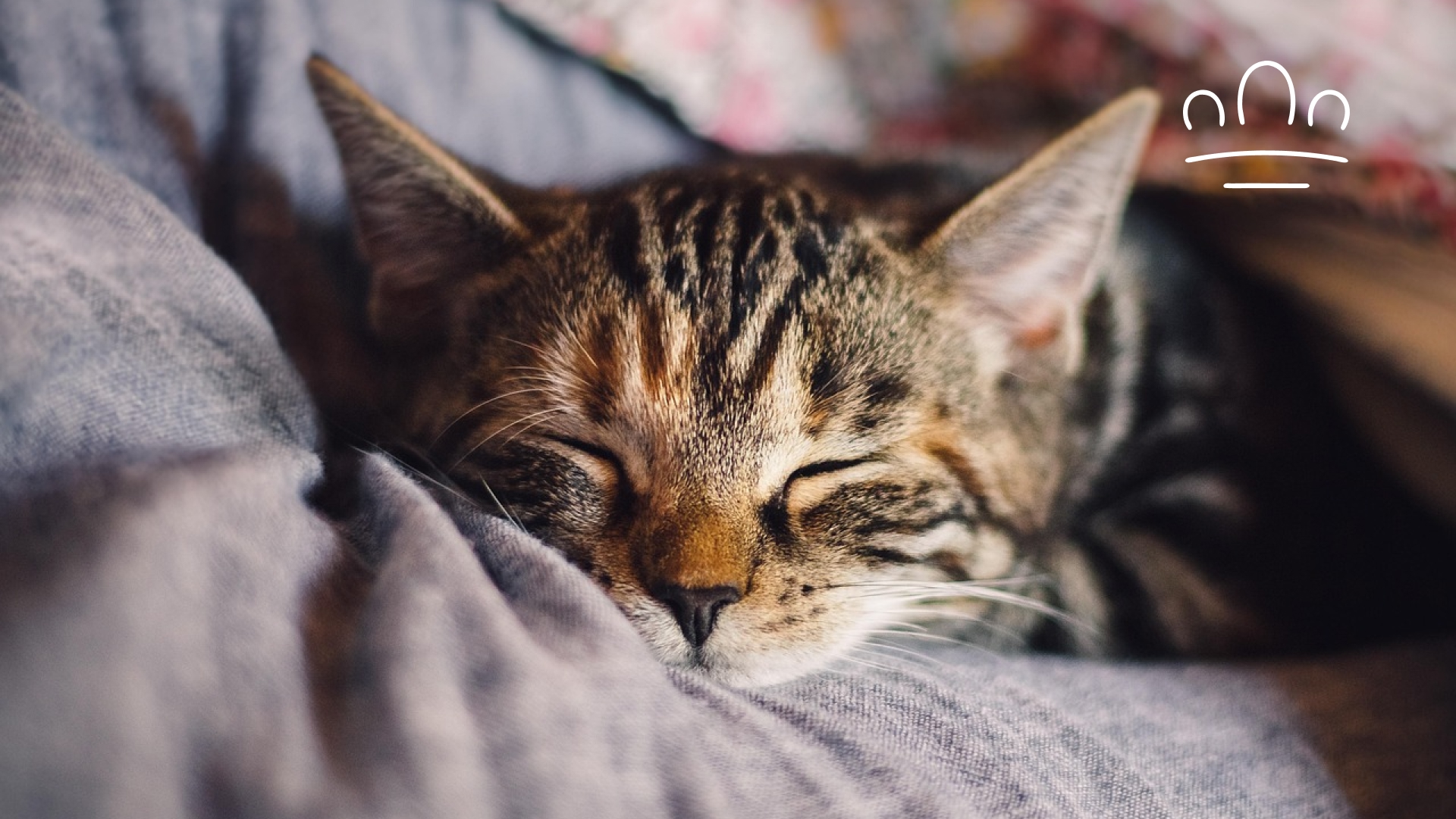
Your cat climbs onto the bed, sofa or chair beside you, turns around several times and settles with their back facing you.
Instead of looking into your eyes or curling against your chest, they point their face toward the room and leave you with a close-up view of their shoulders, back or tail.
So, why does your cat sleep with its back to you?
Most often, the position is completely normal. Your cat may feel safe enough to rest without watching you, prefer facing the open room, enjoy the warmth beside you or simply find that direction more comfortable. Turning away usually does not mean your cat is angry, rejecting you or deliberately ignoring you.
Why Does My Cat Sleep With Its Back to Me?
Your cat may sleep with its back to you because they trust the situation enough to stop monitoring your movements.
Sleep leaves an animal less prepared to respond immediately. A cat that voluntarily settles beside you, relaxes and turns away is probably not treating you as an immediate threat.
However, trust is only one possible part of the explanation. Your cat may also be choosing the best angle for warmth, comfort, escape access or a clear view of the room.
“A cat sleeping with its back toward a familiar person is often comfortable rather than dismissive. Owners should consider whether the cat chose the location voluntarily, has relaxed body language and behaves normally when awake,” says a veterinary consultant for Pet-Scope.
The position matters less than the complete scene. A loose, sleeping cat beside you communicates something different from a tense cat crouching at the far edge of the room.
Does a Cat Turning Its Back Mean It Trusts You?
It can be consistent with trust, particularly when your cat chooses to remain physically close.
A cat that feels unsafe usually wants enough distance to escape or a position from which they can monitor a possible threat. Sleeping beside you while facing away suggests that your presence is familiar enough to permit rest.
Trust becomes a more likely explanation when your cat also:
- approaches you voluntarily
- settles or falls asleep close to you
- keeps the ears and whiskers relaxed
- slowly blinks during other interactions
- grooms or stretches in your presence
- returns to the same sleeping place regularly
- remains calm when you move gently
Cats Protection notes that cats who choose to sleep on or closely beside a person commonly feel safe with that person. Cats within the same social group may also sleep while touching or intertwined.
Still, turning the back is not a scientific test of affection. A cat can trust you while sleeping in another room, and a cat lying beside you may also be there because your blanket is warm.
Your Cat May Be Facing the Part of the Room It Wants to Watch
Your position may not be the most interesting direction.
While resting beside you, your cat may face:
- the bedroom or living-room door
- a hallway used by other people or pets
- a window
- the food area
- a favorite escape route
- a location where sounds commonly begin
Cats often remain partly aware of their surroundings even when they appear to be asleep.
Cats Protection explains that resting cats may continue moving their ears or tail as they monitor the environment. This reflects a natural tendency to remain alert to possible changes nearby.
Your cat may therefore place their back against a familiar person while directing their eyes and ears toward the less predictable part of the room.
That does not necessarily mean they are protecting you. More simply, they may prefer to keep the open space in front of them.
Your Body May Feel Like a Safe Boundary
A cat resting beside your legs, back or side may use your body as one edge of the sleeping space.
With a familiar person behind them, the cat has fewer directions to monitor. Your body can also shield them from movement, drafts or another pet passing close by.
This is similar to choosing a sleeping place beside:
- a wall
- the back of a sofa
- a pillow
- the raised side of a cat bed
- a trusted animal companion
The cat may not be consciously thinking that you are guarding one side. They may simply find the enclosed position comfortable and predictable.
Your Cat May Be Choosing the Most Comfortable Sleeping Position
Sometimes the answer is physical rather than emotional.
Your cat may turn away because that direction allows them to:
- curl their spine comfortably
- rest the head on a pillow or blanket
- avoid pressure from your arm or leg
- stretch into an available space
- keep their whiskers away from fabric
- position a preferred side of the body downward
Cats frequently change position during a longer sleeping period. Your cat may begin facing you, turn away after becoming warmer and later move to the end of the bed.
A single sleeping direction does not need a complicated explanation when the cat appears comfortable.
Your Cat May Be Trying to Stay Warm
Warmth strongly influences where cats sleep.
Your side, legs or back can provide body heat without requiring your cat to lie directly on top of you. Turning away may place more of the cat’s body against the warmest available surface.
Cats Protection identifies warmth as one of the main reasons cats sleep on or close to people.
Your cat may also change orientation depending on the temperature:
- curling tightly and pressing against you when the room is cool
- stretching farther away in warm weather
- moving between you and a cooler area during the night
- facing away so their back rests against your body
Make sure your cat can move away freely. They should not become trapped beneath heavy blankets or between sleeping people.
Why Does My Cat Sleep With Its Back Against Me?
Directly pressing their back against you can provide warmth, physical support and familiar contact.
Your cat may enjoy knowing you are there without wanting face-to-face interaction. The position offers closeness while allowing both of you to rest.
This becomes particularly likely when your cat:
- leans into you before falling asleep
- relaxes more fully after making contact
- purrs, kneads or settles comfortably
- returns after you change position
- chooses the same place on several nights
Back-to-body contact can be socially meaningful without resembling a human embrace. Cats have their own ways of sharing space.
Why Does My Cat Sleep With Its Back to My Face?
The position may feel rather personal from your side of the pillow.
From your cat’s perspective, your head can be one of the most stable and warm areas of the bed. People move their legs and arms frequently during sleep, while the pillow area may remain more predictable.
Your cat may also want to face the doorway while resting near your head. Unfortunately, this sometimes places the cat’s tail directly across your face.
The position usually does not contain a deliberate insult. Cats do not use sleeping orientation to express human-style disrespect.
You can gently create a more comfortable arrangement by placing a small cat blanket or bed beside your pillow. Avoid repeatedly pushing or frightening the cat during sleep.
Why Does My Cat Sleep Facing Away but Touching Me?
This arrangement can combine independence with social contact.
Your cat maintains control of their head, eyes and front paws while keeping one part of the body against you. They receive warmth and tactile contact without being held.
Many cats prefer this to being hugged or restrained.
The contact may involve:
- the back pressed against your leg
- one paw resting on you
- the tail touching your side
- the rear legs leaning against you
- the cat sleeping between your feet
Remaining close while preserving the option to move away can be an ideal feline compromise.
Your Cat May Not Want Face-to-Face Contact While Sleeping
Human faces move, breathe and make noise.
Your cat may find your breathing, snoring or nighttime movement less disturbing when facing the opposite direction. Whiskers are highly sensitive, so a cat may also prefer not to have their face pressed against bedding, hair or your skin.
Turning away allows your cat to keep the face unobstructed while still sleeping nearby.
This does not mean they dislike looking at you when awake. Resting comfort and social eye contact are different situations.
Does My Cat Sleep With Its Back to Me Because It Is Angry?
Usually not.
People often interpret turning away as rejection because humans sometimes use it deliberately during social conflict. Cats do not necessarily attach the same meaning to the position.
A relaxed cat that eats, plays, approaches you and continues normal routines is unlikely to be expressing anger simply through sleeping direction.
Possible signs that your cat wants more space include:
- a rigid or crouched body
- ears held sideways or flattened
- wide pupils in normal lighting
- a rapidly moving or lashing tail
- growling or hissing
- skin twitching during touch
- leaving whenever you approach
A sleeping cat with closed eyes, loose muscles and relaxed ears is not showing the same pattern as an alert cat turning away while holding the body tense.
Why Does My Cat Turn Its Back After I Pet It?
Your cat may simply be repositioning for sleep.
However, turning away can also mean that the active interaction has ended. The cat may still want to remain beside you without receiving more touch.
Watch for subtle signals that petting should stop:
- the head turning away
- ears rotating backward
- the tail beginning to move sharply
- the skin along the back twitching
- the cat shifting beyond your reach
- licking suddenly after being touched
When your cat turns away and settles, pause your hand. Let them choose whether to return for more contact.
Sleeping beside you does not create permanent permission to touch them whenever you choose.
Should You Pet a Cat That Is Sleeping With Its Back to You?
It is usually better to let a sleeping cat rest.
Cats spend much of the day sleeping or resting, and repeated disturbance can make a chosen location feel less secure.
Cats Protection advises against unnecessarily waking sleeping cats, particularly when they have chosen a comfortable and safe resting place.
When contact is necessary:
- speak softly before touching
- approach where the cat can detect you
- avoid suddenly grabbing the back or tail
- use a gentle touch near the shoulder or head
- stop if the cat becomes tense or moves away
Children should be taught not to pick up, hug or surprise a sleeping cat.
Why Does My Cat Sleep Beside Me but Never on Me?
Cats differ in their preferred level of contact.
One cat may sleep directly on a person’s chest. Another chooses a nearby pillow, chair or corner of the bed. Both cats may feel safe and socially connected.
Your cat may avoid sleeping on you because:
- you move too much
- your body becomes too warm
- they prefer a firmer surface
- they want a clearer escape route
- direct contact becomes overstimulating
- they were not accustomed to close handling when young
Do not force the cat onto your lap or body to test the relationship.
A cat that chooses to share the room or bed is already making a social choice, even when a small gap remains between you.
Why Does My Cat Sleep at My Feet With Its Back to Me?
The foot of the bed can offer several advantages.
Your cat may have:
- more space to stretch
- less movement than near your arms
- a clear view of the door
- an easier route off the bed
- warmth without becoming overheated
Facing away may allow the cat to watch the room while remaining close enough to feel your movement.
Be careful when turning or getting out of bed. A dark-colored cat at your feet can be difficult to see at night.
Why Does My Cat Sleep Back-to-Back With Another Cat?
Compatible cats may sleep touching, curled together or back-to-back.
Physical proximity can provide warmth and social comfort. Facing opposite directions also allows each cat to orient toward a different part of the room.
Do not assume that every pair sharing a bed is closely bonded. Also look for:
- mutual grooming
- friendly rubbing
- comfortable play
- voluntary time together
- the absence of blocking and intimidation
Each cat should still have access to separate beds, food, water, litter trays and hiding places.
Could Another Pet Influence the Direction Your Cat Sleeps?
Yes. A cat may orient toward a doorway or open area when another animal moves through the home.
This does not automatically indicate serious conflict. The cat may simply prefer seeing the dog, kitten or other cat before that animal comes close.
Look for possible tension when your cat:
- rarely enters certain rooms
- leaves whenever another pet approaches
- sleeps only in high or hidden locations
- guards doorways or is blocked by another animal
- becomes tense despite appearing to rest
- has changes in appetite or litter-box use
If your cat used to sleep openly beside you but now hides after the arrival of another pet, review the introductions and household resources.
Why Has My Cat Suddenly Started Sleeping With Its Back to Me?
A new position alone may mean very little.
Your cat may be responding to:
- a change in room temperature
- different bedding
- your new sleeping position
- light from a window
- another pet’s location
- a new sound outside the room
- a change in their physical comfort
Pay closer attention when the new position is part of a broader change.
For example, veterinary advice is appropriate when your cat also:
- avoids normal contact
- hides more
- sleeps much more or less
- stops jumping onto familiar furniture
- appears stiff when standing
- eats less
- changes litter-box habits
- reacts negatively to touch
One reversed sleeping position is rarely enough to suggest illness. A pattern of changes is more meaningful.
Could Pain Change the Way Your Cat Faces While Sleeping?
Yes. Cats may adjust their posture to avoid pressure on a painful area.
A cat with discomfort may:
- consistently lie on only one side
- keep the legs tightly tucked beneath the body
- avoid stretching out
- change position repeatedly
- sleep in places that require less jumping
- resent touch along the back, hips or abdomen
- struggle when standing after sleep
Do not press, stretch or repeatedly test a sensitive area. Arrange a veterinary examination when the position is new and accompanied by stiffness, reduced movement or a change in temperament.
What About an Older Cat Sleeping Differently?
Senior cats often sleep more and may change their preferred locations as mobility, vision, hearing and temperature regulation change.
A lower bed may become easier to reach. A warmer surface may feel more comfortable. Your cat may also choose a position that avoids pressure on stiff joints.
The Cornell Feline Health Center advises owners not to dismiss gradual behavior or mobility changes as an inevitable part of aging. Such changes can reflect treatable medical or dental problems.
Help an older cat by providing:
- several warm, supportive beds
- low-entry sleeping areas
- steps or ramps to favorite furniture
- non-slip surfaces
- easy access to food, water and litter trays
- regular veterinary examinations
The direction your senior cat faces is less important than whether they can get comfortable and move normally afterward.
How Can You Tell Whether Your Cat Is Relaxed While Facing Away?
Look beyond the direction of the head.
A relaxed sleeping cat may have:
- ears resting naturally
- closed or partly closed eyes
- loose facial muscles
- relaxed whiskers
- steady, quiet breathing
- paws resting comfortably
- a loose or gently curled tail
- the ability to stretch or change position easily
A cat that is not fully comfortable may have:
- a tightly crouched or rigid posture
- ears frequently rotating backward
- wide eyes despite lying down
- the tail held tightly against the body
- rapid breathing
- frequent position changes
- difficulty settling
- immediate retreat when someone moves
Your cat’s ordinary pattern is an important comparison. A position that is normal for one cat may represent a meaningful change for another.
How Can You Create Better Sleeping Places for Your Cat?
Cats benefit from having several resting options rather than one official bed.
Cats Protection recommends warm, comfortable, elevated and safe sleeping locations.
Provide a mixture of:
- Elevated beds: useful for cats that prefer watching the room from above.
- Enclosed beds: suitable for cats that like covered, quieter spaces.
- Open cushions: useful for stretching and changing position.
- Warm locations: placed safely away from excessive heat.
- Quiet locations: away from busy doors and household traffic.
- Easy-access beds: especially important for kittens, older cats and cats with mobility problems.
- Separate options: essential when several pets share the home.
Allow your cat to decide which bed suits the time, temperature and household activity.
Do not be surprised when the carefully chosen premium bed loses to a cardboard box or a folded jumper.
When Should a Change in Your Cat’s Sleeping Behavior Concern You?
Sleeping with the back toward you is not itself a warning sign.
Contact your veterinarian when a new sleeping pattern appears with:
- loss of appetite
- weight loss
- increased or reduced drinking
- changes in urination or defecation
- difficulty jumping or walking
- stiffness after rest
- hiding or social withdrawal
- unusual aggression when touched
- restlessness or inability to settle
- rapid or labored breathing
- vomiting or diarrhea
- poor grooming or a matted coat
- confusion or unusual nighttime vocalization
Record a short video or take photographs if the posture appears unusual. Note how your cat gets into the position, whether they change sides and how they move after waking.
How Is This Different From Your Cat Staring at You?
A cat facing away during sleep has reduced the need for active visual monitoring.
A cat staring from another part of the room may still be gathering information, waiting for a routine or deciding whether to approach.
Our guide to why cats stare at their owners from across the room explains how food, attention, curiosity, play and body language can shape that very different interaction.
Your cat can watch you closely while awake and sleep facing away later. The two behaviors are not contradictory.
Why Does My Cat Follow Me and Then Sleep Facing Away?
Your cat may want companionship without continuous interaction.
Following you into a room allows them to remain part of the household activity. Once they choose a sleeping place, they may face whichever direction feels most practical.
Our article on why cats follow their owners to the bathroom explores how social interest, curiosity and learned routines can encourage cats to move through the home with their people.
Following you does not obligate the cat to stare at you throughout the nap.
What Your Cat’s Zodiac Sign Might Say About Sleeping With Its Back to You
From a Pet-Scope point of view, your cat’s zodiac sign can add a playful personality layer to the sleeping arrangement. Astrology cannot diagnose pain, stress or sleep problems, but it can describe how your cat claims the preferred side of the bed.
Fire-sign cats — Aries, Leo and Sagittarius — may turn their back because the rest of the room requires supervision. Aries is ready to move at the first sound, Leo assumes you are still admiring them, and Sagittarius wants the clearest route toward the next adventure.
Earth-sign cats — Taurus, Virgo and Capricorn — may have calculated the most comfortable position. Taurus chooses maximum warmth, Virgo adjusts the blanket precisely, and Capricorn returns to the same place every night.
Air-sign cats — Gemini, Libra and Aquarius — may change direction several times before sleeping. Gemini monitors both sides of the room, Libra stays close without becoming crowded, and Aquarius faces the wall for reasons known only to Aquarius.
Water-sign cats — Cancer, Scorpio and Pisces — may rest with their back pressed against someone they trust. Cancer wants a secure boundary, Scorpio keeps the doorway in view, and Pisces falls asleep wherever the atmosphere feels calmest.
Explore all twelve personalities in our Cat Zodiac Signs guide. You can also try our Pet Compatibility reading for a playful look at the connection between your zodiac sign and your cat’s.
Want a reading for your cat?
Choose your cat’s zodiac sign, add a few personality notes, and create a playful Pet-Scope reading inspired by their habits, moods and carefully selected sleeping positions.
Quick Questions About Cats Sleeping With Their Backs to You
Why does my cat turn its back to me and go to sleep?
Your cat may feel safe enough to stop watching you, prefer facing the room or simply find that direction more comfortable. Relaxed posture and normal behavior afterward usually suggest there is no problem.
Is it a compliment when a cat sleeps with its back to you?
It can reflect comfort and trust when the cat voluntarily sleeps close to you. However, sleeping direction alone cannot measure the strength of your relationship.
Why does my cat put its back against me?
Your body may provide warmth, support and a familiar boundary. The cat can maintain physical contact while keeping its face directed toward the room.
Why does my cat sleep facing the door?
The doorway is an important route for people, animals and sounds. Your cat may prefer seeing activity before it reaches the sleeping area.
Why does my cat sleep facing the wall?
The wall may reduce light or visual stimulation, or the position may simply suit the bed. Concern increases when the behavior is new and appears with withdrawal, confusion, pain or appetite changes.
Why does my cat sleep near me but not touch me?
Your cat may value companionship while preferring more space, less heat or freedom to move. Sharing the same room or bed can still be a social choice.
Why does my cat sleep with its rear toward my face?
The cat may be orienting toward the door or using the pillow as a warm, stable location. The position is generally practical rather than an intentional insult.
Why does my cat sleep with its back to me and tail touching me?
The tail may remain in contact because the cat wants warmth or social connection without turning around. A relaxed tail and body usually suggest comfort.
Why does my cat suddenly no longer sleep facing me?
Temperature, bedding, household sounds or simple preference may explain the change. Look for other changes in appetite, mobility, sociability, grooming and litter-box use.
Should I turn my cat around to face me?
No. Let your cat choose the position that feels comfortable. Repositioning a resting cat can disturb sleep and make the location less appealing.
Does my cat turn away because it does not love me?
No. Cats do not measure attachment through constant eye contact. A cat that voluntarily sleeps near you is already choosing proximity, even while facing another direction.
The Pet-Scope Take
If your cat sleeps with its back to you, the most likely explanation is not rejection.
Your cat may trust you enough to stop watching, use your body as a warm and familiar boundary, or prefer facing the part of the room where activity might occur.
Read the whole cat rather than one sleeping angle. A loose body, relaxed ears, quiet breathing and normal behavior when awake usually indicate a comfortable nap.
A sudden sleeping change becomes more important when it appears with pain, hiding, appetite loss, mobility problems or altered litter-box habits.
For many cats, turning their back means something simple:
You are the predictable side of the room. They are watching everything else.
Disclaimer
This article is for general informational and entertainment purposes only. It is not a substitute for professional veterinary advice, diagnosis or behavioral assessment. If your cat develops a sudden change in sleeping habits, pain, stiffness, breathing difficulty, appetite loss, unusual hiding, confusion or any other significant change in normal behavior, contact a licensed veterinarian.