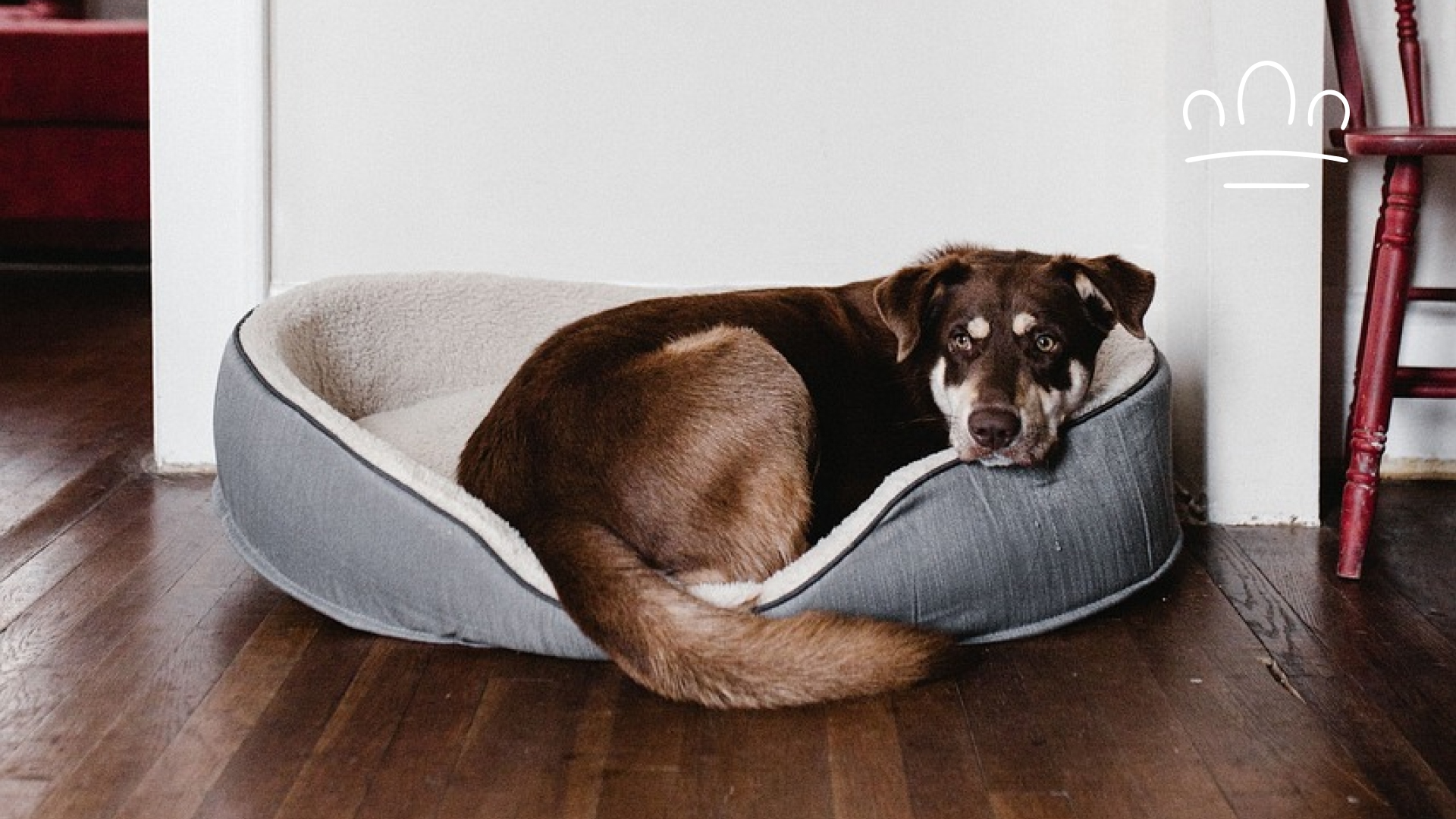
Your dog circles their bed, lowers their body and lets out one long, dramatic sigh.
The sound may be so expressive that it seems to carry a complete opinion about the day. Sometimes your dog closes their eyes immediately afterward. At other times, they keep watching you as though the sigh was intended to make a point.
So, why does your dog sigh when it lies down?
Most often, the sigh accompanies relaxation and the transition from activity to rest. Your dog may be getting comfortable, releasing excitement or settling after deciding that nothing else interesting is about to happen. Context still matters, because repeated sighing with restlessness, pain or abnormal breathing deserves closer attention.
Why Does My Dog Sigh When It Lies Down?
Your dog probably sighs when lying down because they are settling into a calmer state.
The walk is over. The room has become quiet. Their muscles begin to relax, and one deeper breath marks the change from watching the household to resting.
The American Kennel Club explains that a dog sighing while curling up in bed is commonly preparing to rest. A comfortable dog may also produce slower, deeper breaths as their activity level decreases.
“A single sigh as a dog lies down is usually part of normal relaxation. The meaning becomes clearer when owners also look at the eyes, posture, breathing effort, mobility and what the dog does next,” says a veterinary consultant for Pet-Scope.
A dog who sighs and falls asleep peacefully is showing a different pattern from one who sighs repeatedly, changes position constantly or struggles to breathe.
Is It Normal for a Dog to Sigh Before Sleeping?
Yes. It is generally normal for a dog to sigh as they settle down or prepare to sleep.
The behavior is usually less concerning when your dog:
- lies down comfortably
- has a loose and relaxed body
- closes or partly closes the eyes
- breathes quietly without visible effort
- rests in the same position afterward
- gets up and moves normally later
- continues eating, walking and playing as usual
No single sound proves that a dog is content. However, a sigh combined with soft body language and comfortable sleep usually fits a normal resting routine.
Your Dog May Be Relaxing After an Active Moment
A sigh often appears when activity ends.
Your dog may have finished a walk, watched someone prepare food, greeted a visitor or followed you from one room to another. Once the event passes, they find a suitable place and settle.
You might hear the sigh after:
- an evening walk
- a play session
- training or mental activity
- greeting someone at the door
- waiting for the household to become quiet
- climbing onto a favorite bed
The exhalation can sound unusually dramatic because dogs have no reason to make it socially discreet. A large dog with a deep chest may produce a particularly impressive bedtime sigh.
If your dog rests comfortably afterward, the sound is usually part of the transition into relaxation rather than a complaint.
Your Dog May Be Showing Contentment
Some dogs sigh during moments that appear deeply satisfying.
They may rest their head on a paw, lean against you or curl into a warm bed before letting out a slow breath. Soft eyes and a relaxed face make contentment a reasonable interpretation.
Other clues can include:
- the body feeling loose rather than rigid
- the head resting fully on the floor or bed
- slow blinking
- the dog remaining asleep or calm afterward
- no repeated attempts to reposition
- quiet and regular breathing
This does not mean every sigh translates directly as “I am happy.” Instead, the whole scene suggests that your dog feels safe enough to stop monitoring the environment and rest.
Your Dog May Sigh Because Nothing Else Is Happening
Sometimes the sigh appears after your dog expected something more interesting.
Perhaps they brought you a toy, waited near the door or watched you move toward the kitchen. Instead of beginning a game or producing a snack, you sat down.
Your dog then lowers themselves to the floor and sighs.
In this context, the sound may accompany mild disappointment or the acceptance that the hoped-for activity is not happening right now. It is not necessarily emotional suffering. Your dog may simply be switching from anticipation to rest.
Watch the eyes and the next action. A dog who keeps watching you may still be waiting. One who closes their eyes has probably accepted the revised schedule.
Your Dog May Be Asking for Attention
A well-timed sigh can produce a reliable human response.
You may look down, ask what is wrong or begin stroking your dog. After enough repetitions, the sound can become part of an attention-seeking routine.
The sequence may look like this:
I lie down beside the human. I sigh loudly. The human notices me.
Attention becomes a more likely explanation when your dog:
- looks directly at you after sighing
- places their head on your foot or knee
- nudges your hand
- sighs again when you stop petting
- moves closer after you respond
- brings a toy before lying down
This is not calculated manipulation. Dogs naturally repeat behaviors that lead to predictable social results.
If your dog regularly presents an object before settling, our guide to why dogs bring toys when their owners come home explores how greeting and attention routines develop.
Your Dog May Have Created a Bedtime Sighing Routine
Dogs learn sequences that happen at similar times each day.
You switch off the television, lock the door and prepare for bed. Your dog goes to the same sleeping place, turns around and sighs before closing their eyes.
After many repetitions, the sigh can become part of a familiar routine rather than a response to one particular emotion.
The pattern may be associated with:
- the final trip outside
- lights becoming dimmer
- family members going to bed
- a familiar blanket being arranged
- the end of evening activity
- settling beside a particular person
A predictable sleep routine can help dogs understand when the active part of the day has ended.
Why Does My Dog Sigh When It Lies Next to Me?
Your presence may help create a secure resting environment.
A dog that chooses to lie beside you and then sigh may be settling into social contact without requesting active play or petting.
They can feel your movement, smell your familiar scent and remain close while resting. For some dogs, that is enough interaction.
The behavior may be connected with companionship when your dog:
- chooses your side even when other beds are available
- leans against your legs
- rests a paw or head on you
- falls asleep shortly afterward
- remains relaxed when you move gently
Some dogs prefer more direct contact and position themselves across their owner’s shoes. Read why dogs sit on their owners’ feet for more about closeness, security and learned habits.
Why Does My Dog Sigh When I Stop Petting It?
Your dog may sigh because an enjoyable interaction has ended.
They might keep their head under your hand, look upward or move closer in an attempt to restart the attention. In that case, the sigh can be part of a gentle request.
However, not every dog wants petting to continue indefinitely. A dog may also sigh as they relax after contact and prepare to sleep.
Notice whether your dog:
- nudges your hand for more
- moves their body back under your fingers
- remains comfortably in place
- turns their head away
- gets up and chooses another location
Let the dog decide whether to continue. Repeatedly pulling them back or forcing contact can make rest less comfortable.
Why Does My Dog Sigh With Its Eyes Open?
Open eyes may mean that your dog is still monitoring you or the surrounding room.
They may have lowered their body but remain interested in what happens next. Food, a walk or another household event could still be possible.
Open eyes do not automatically indicate disappointment or stress. Consider their softness and the rest of the face.
A relaxed dog may have:
- soft eyes without an intense fixed gaze
- ears in a natural position
- a loose jaw
- slow and quiet breathing
- a comfortable resting posture
Wide eyes, visible whites, pinned ears and a tense mouth suggest that the dog may be worried rather than peacefully resting.
Why Does My Dog Sigh With Its Eyes Closed?
A sigh followed by closed eyes commonly accompanies rest.
Your dog has chosen a position, reduced their attention to the room and may be moving toward sleep.
As dogs fall asleep, their breathing generally becomes deeper and more regular. Later, dream-related sleep can include changes in breathing rhythm and small muscle movements.
VCA Animal Hospitals explains that a dog’s breathing becomes deeper and more regular as sleep begins. During dreaming, the pattern may become temporarily shallower or less regular.
A calm dog sleeping comfortably should not need to be woken merely because one breath sounded deeper than the others.
Why Does My Puppy Sigh When Lying Down?
Puppies experience frequent transitions between excitement and sleep.
They may play intensely, explore the room and then become tired almost immediately. A sigh can appear as the puppy finally settles.
Puppies may also use sounds more freely than adult dogs. Groans, whimpers and sighs can all appear during comfortable social contact or sleep.
Make sure your puppy has:
- a quiet sleeping area
- an age-appropriate routine
- enough opportunities for toilet breaks
- suitable exercise without exhaustion
- safe chewing and enrichment activities
- undisturbed periods of sleep
A puppy who repeatedly cries, cannot settle, has diarrhea, refuses food or appears physically uncomfortable should be assessed by a veterinarian.
Why Does My Older Dog Sigh When It Lies Down?
An older dog may sigh for the same harmless reasons as any other dog. However, changes in the way they lower themselves or rise again deserve attention.
Joint pain, muscle weakness and reduced mobility can make lying down more difficult. What sounds like an ordinary sigh may sometimes accompany physical effort or discomfort.
Watch for:
- circling for a long time before lying down
- lowering the front and back of the body in separate stages
- hesitating before bending a joint
- groaning when changing position
- standing up slowly
- avoiding stairs or slippery floors
- restlessness during the night
- reduced interest in walks
Do not assume that mobility changes are an unavoidable part of aging. Veterinary assessment and appropriate management can improve comfort.
Is My Dog Sighing or Groaning?
A sigh is generally a deeper breath followed by a noticeable exhalation.
A groan is more vocal. It may sound lower, rougher or longer because the dog is using the voice as well as breathing out.
Dogs can groan harmlessly while:
- stretching
- changing position
- enjoying physical contact
- settling into a comfortable bed
- waking from sleep
Groaning deserves closer attention when it repeatedly occurs during movement or when a specific area of the body is touched.
Possible discomfort becomes more likely if your dog also shows stiffness, limping, reluctance to jump, sensitivity to handling or difficulty getting comfortable.
Is My Dog Sighing or Breathing Heavily?
A normal sigh is one noticeable deeper breath. Heavy or labored breathing is a continuing pattern.
With respiratory difficulty, you may see:
- the chest or abdomen working harder with each breath
- rapid breathing while the dog is resting
- open-mouth breathing when the dog is not hot
- flared nostrils
- the neck extended to breathe
- inability to settle or lie comfortably
- noisy breathing
- pale, gray or blue gums
The Merck Veterinary Manual identifies coughing and labored breathing as important signs of lung or airway disease. Breathing problems can also be associated with disorders outside the respiratory system, including heart disease.
Difficulty breathing is an emergency. Contact a veterinarian immediately rather than waiting to see whether it improves.
How Can You Check Your Dog’s Resting Breathing Rate?
Counting your dog’s resting breaths can provide useful information when you are unsure whether the pattern has changed.
Wait until your dog is calmly resting or sleeping. Do not count immediately after exercise, excitement, panting or exposure to heat.
- Watch the chest rise and fall.
- Count one complete rise and fall as one breath.
- Count for 30 seconds.
- Multiply the result by two to obtain breaths per minute.
- Repeat on several calm occasions to learn your dog’s usual pattern.
VCA states that a normal resting or sleeping breathing rate for many dogs is generally between 15 and 30 breaths per minute. A rate consistently above your dog’s established normal level should be discussed with your veterinarian.
Your veterinarian may set a different threshold for a dog with an existing heart or respiratory condition. Follow their individual instructions rather than relying only on a general range.
Can Stress Make a Dog Sigh?
Stress can change a dog’s breathing, posture and vocal behavior. However, a sigh alone does not diagnose anxiety.
A stressed dog may also show:
- panting without heat or exercise
- pacing
- repeated yawning
- lip licking
- drooling
- ears held back
- wide eyes
- trembling
- difficulty settling
A dog that sighs once and sleeps is unlikely to be showing the same pattern as a dog who repeatedly sighs, paces and cannot rest.
Should You Respond When Your Dog Sighs?
You usually do not need to react to a normal resting sigh.
Let your dog continue sleeping or relaxing. Constantly touching or speaking to them may interrupt the quiet period they have just chosen.
When the dog looks at you afterward, briefly check the context:
- Is it close to the normal walk or feeding time?
- Does your dog need a toilet break?
- Are they comfortably positioned?
- Is the room too hot?
- Are there signs of pain, stress or abnormal breathing?
If basic needs are met and your dog appears relaxed, the best response may be no response at all.
How Can You Help Your Dog Settle Comfortably?
A suitable resting area should support your dog’s size, age and mobility.
Consider:
- Bed size: your dog should be able to stretch and change position.
- Support: older or painful dogs may benefit from a supportive bed recommended by their veterinarian.
- Temperature: keep the sleeping area away from excessive heat, cold and drafts.
- Noise: provide somewhere quieter than the busiest household route.
- Flooring: use non-slip surfaces around the bed when mobility is reduced.
- Choice: allow access to more than one comfortable resting place.
- Routine: keep evening activity and sleep times reasonably predictable.
A dog should be able to rest without being continually disturbed by children, visitors or other pets.
When Should Dog Sighing Concern You?
An occasional sigh is usually harmless. Concern increases when the sound is new, frequent or accompanied by another change.
Contact your veterinarian if your dog also shows:
- difficulty lying down or getting up
- repeated groaning during movement
- limping or stiffness
- restlessness and frequent position changes
- rapid breathing while resting
- coughing
- noisy or labored breathing
- reduced ability to exercise
- loss of appetite
- unusual tiredness
- a swollen abdomen
- pale or blue gums
- collapse or fainting
A sudden change in breathing, gum color or consciousness requires urgent veterinary attention.
Record a short video when possible. Showing how your dog lies down, breathes and moves afterward may help the veterinarian identify whether the sound is related to normal rest, pain or respiratory effort.
What Your Dog’s Zodiac Sign Might Say About the Dramatic Sigh
From a Pet-Scope point of view, your dog’s zodiac sign can add a playful personality layer to the bedtime exhalation. Astrology cannot diagnose pain or breathing problems, but it can describe the style of the sigh.
Fire-sign dogs — Aries, Leo and Sagittarius — may sigh because the exciting part of the day has ended too soon. Aries wanted one more game, Leo wanted more attention, and Sagittarius remains convinced that another walk is still possible.
Earth-sign dogs — Taurus, Virgo and Capricorn — may sigh once the resting routine is properly arranged. Taurus has found the softest bed, Virgo has completed the evening inspection, and Capricorn is officially off duty.
Air-sign dogs — Gemini, Libra and Aquarius — may use the sigh as social commentary. Gemini follows it with another request, Libra settles beside you, and Aquarius sighs from a location nobody expected them to choose.
Water-sign dogs — Cancer, Scorpio and Pisces — may deliver the deepest sigh while resting close to someone they trust. The sound can feel emotional even when the dog is simply becoming comfortable.
Explore all twelve personalities in our Dog Zodiac Signs guide. You can also try the Pet Compatibility reading for a playful look at the connection between your sign and your dog’s.
Want a reading for your dog?
Choose your dog’s zodiac sign, add a few personality notes, and create a playful Pet-Scope reading based on their habits, moods and most expressive ways of settling down.
Quick Questions About Dogs Sighing When They Lie Down
Why does my dog sigh every time it lies down?
The sigh may be part of a familiar resting routine. It is generally less concerning when your dog lies down easily, breathes normally and remains active and comfortable at other times.
Why does my dog sigh loudly before sleeping?
Some dogs naturally produce a loud exhalation as they relax. Body size, position and the shape of the airway can affect how noticeable the sound becomes.
Why does my dog sigh when I do not play with it?
Your dog may be shifting from anticipation to rest after realizing that play is not beginning. If sighing reliably leads to attention, it may also become a learned request.
Why does my dog sigh when I pet it?
A sigh during gentle petting may accompany relaxation. Continue only while the dog remains loose and voluntarily stays close. Moving away, turning the head or becoming tense can signal that they want a break.
Why does my dog sigh and groan when lying down?
A quiet groan can accompany stretching or settling. Repeated groaning with stiffness, difficulty lowering the body or sensitivity to touch may indicate pain and should be discussed with a veterinarian.
Why does my dog keep changing position after sighing?
The bed may be uncomfortable, the room may be too warm or your dog may be restless. Persistent inability to settle can also accompany pain, stress, digestive discomfort or breathing problems.
Why does my dog sigh after a walk?
Your dog may be moving from activity into rest. Check that their breathing returns to normal and that they are not excessively hot, weak or struggling to recover.
Why does my dog sigh when lying on my feet?
Your feet may provide warmth, familiar scent and social contact. A relaxed dog may sigh once they have secured their preferred resting position.
Why has my senior dog suddenly started sighing more?
A change in frequency deserves attention, particularly if your dog also has stiffness, difficulty lying down, nighttime restlessness, coughing or faster breathing at rest.
Can frequent sighing mean my dog has heart problems?
Sighing alone cannot diagnose heart disease. Coughing, reduced exercise tolerance, rapid resting breathing, weakness, collapse or a swollen abdomen are more concerning and require veterinary assessment.
The Pet-Scope Take
If your dog sighs when lying down, the most likely explanation is that they are moving from household activity into rest.
The bed is comfortable, the humans have finally stopped moving and there is apparently no immediate chance of food, play or adventure.
Read the whole situation. One long exhalation followed by quiet sleep is usually normal. Repeated sighing with restlessness, pain, coughing or labored breathing needs closer attention.
For many dogs, the evening sigh is not a sign that life has become unbearable.
It is simply the official sound of accepting that you are not going for another walk.
Disclaimer
This article is for general informational and entertainment purposes only. It is not a substitute for professional veterinary advice, diagnosis or treatment. If your dog has difficulty breathing, pale or blue gums, collapse, rapid resting breathing, persistent coughing, pain, difficulty lying down or any sudden change in normal behavior, contact a licensed veterinarian promptly.