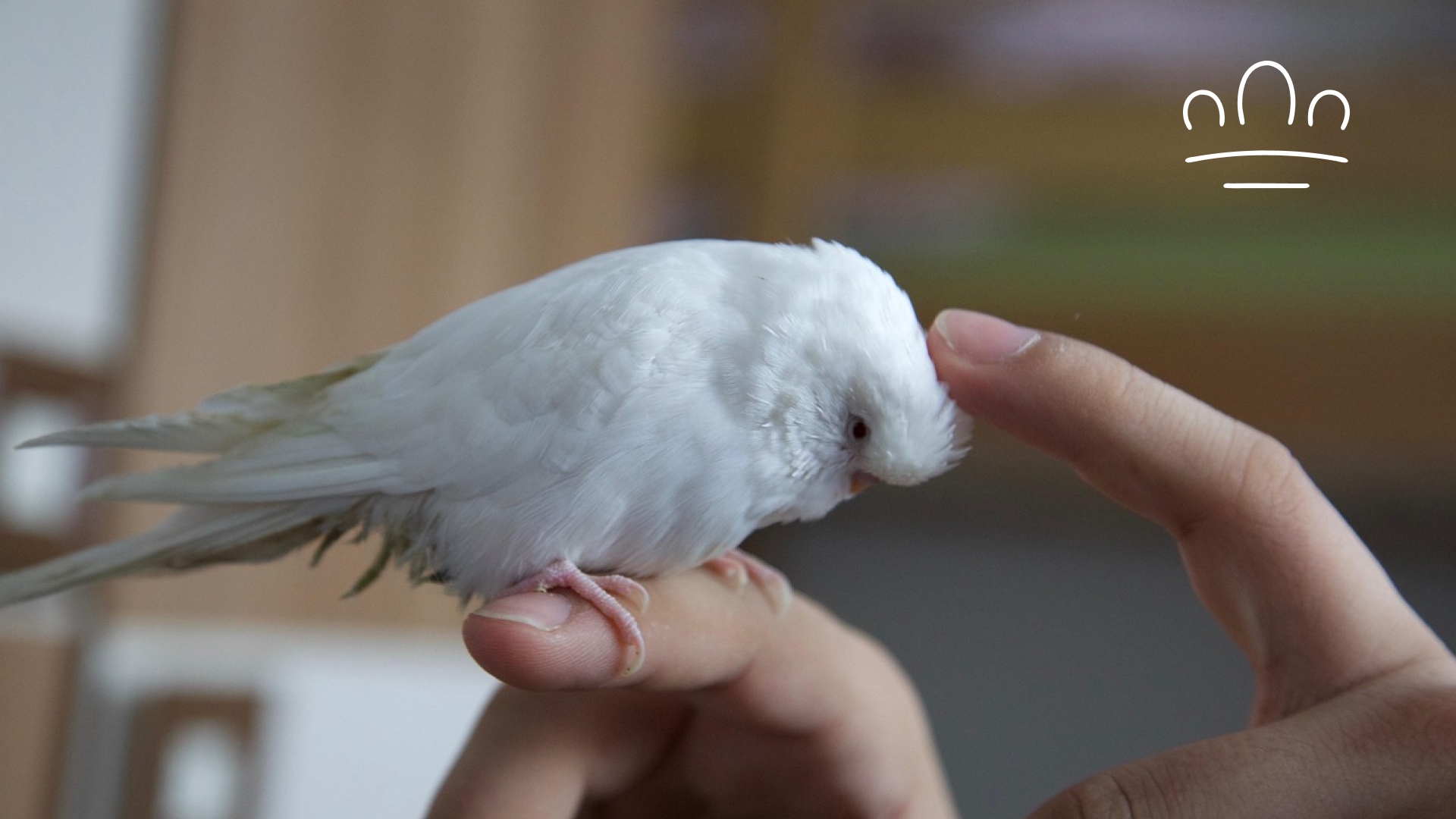
You begin talking to your budgie, and their head immediately starts moving up and down.
They may bob faster when your voice becomes animated, chirp between movements or lean toward you as if they are trying to join the conversation.
So, why does your budgie bob its head when you talk to it?
In many cases, head bobbing is an excited social response. Your budgie may be reacting to your voice, asking for attention, joining the rhythm of the interaction or repeating a behavior that has received a positive response before.
However, head bobbing can also appear during feeding behavior, courtship or regurgitation. Less commonly, unusual or uncontrolled head movements may occur alongside illness. The surrounding body language and what happens immediately afterward are therefore important.
Why Does My Budgie Bob Its Head When I Talk to It?
Your budgie may bob its head when you talk because your voice has created an interesting social event.
Budgies are vocal, active parrots. They pay close attention to sound, movement and familiar routines. When you speak, your bird may become more alert, move closer and respond with a mixture of chirping, body movement and head bobbing.
Lafeber’s guide to parrot behavior explains that head bobbing can have several meanings, including wanting to go somewhere or beginning a regurgitation-related bonding behavior. Very young parrots also tend to bob their heads frequently.
“Head bobbing during a lively interaction is often normal social or excited behavior. Owners should look at whether the movement is voluntary and coordinated, and whether the bird remains bright, active, eating normally and able to stop the behavior,” says a veterinary consultant for Pet-Scope.
A budgie who bobs while chirping and interacting normally is very different from a bird who appears weak, loses balance or moves the head repeatedly without responding to the environment.
Is It Normal for a Budgie to Bob Its Head When You Speak?
Yes. Head bobbing can be normal when your budgie is alert, coordinated and otherwise behaving as usual.
The behavior is generally less concerning when your bird:
- bobs mainly during talking, music or exciting activity
- looks toward you and responds to your voice
- chirps or moves around normally
- stops bobbing when attention shifts elsewhere
- eats, drinks and preens normally
- flies, climbs and balances without difficulty
- shows no breathing difficulty or unusual discharge
Some budgies are naturally more expressive than others. One bird may respond to conversation with constant movement, while another listens quietly and answers with only a few chirps.
The frequency alone does not determine whether the behavior is normal. Control, context and the bird’s general condition matter more.
Your Budgie May Be Excited by Your Voice
Talking can immediately increase your budgie’s level of interest.
Your voice changes in pitch, volume and rhythm. You may also move your face, hands and body while speaking. Together, these signals can make the interaction stimulating.
An excited budgie may:
- bob the head rapidly
- chirp or chatter
- move from side to side on the perch
- climb toward you
- stretch the neck forward
- flutter the wings briefly
- move between you and a favorite toy
The head bob may become more energetic when you use a cheerful voice or repeat a familiar phrase.
In this situation, your budgie may not be communicating one precise message. They may simply be participating in the excitement of the moment.
Your Budgie May Be Trying to Join the Conversation
Budgies use vocalizations and movement as part of social interaction.
When you talk, your bird may answer with chirps, whistles or body movements. Head bobbing can become one part of this response.
The RSPCA explains that most pet birds are social animals that benefit from appropriate companionship. Budgies naturally live in social groups, so communication and awareness of nearby companions are important parts of their behavior.
Your budgie may have learned that conversation is a shared activity. They hear their name, recognize a phrase or notice that you are looking directly at them.
The result can look like a tiny bird giving an enthusiastic speech without waiting for their turn.
Your Budgie May Be Responding to Rhythm and Movement
Head bobbing can become stronger when speech has a clear rhythm.
You may notice the behavior when you:
- repeat the same phrase
- sing to your bird
- whistle a short tune
- move your own head gently
- play music with a noticeable beat
- clap or tap in a regular pattern
Your budgie may be responding to the whole performance rather than the meaning of the words.
A similar reaction can happen when environmental sound becomes interesting. Our guide to why budgies start chirping when the TV is on explores how voices, music and changing sound patterns can trigger social vocal behavior.
Keep volume moderate. Budgies have sensitive hearing, and loud sound beside the cage can be stressful rather than entertaining.
Your Budgie May Want Attention
Head bobbing often gets an immediate human response.
You may laugh, move closer, repeat a phrase or begin talking more enthusiastically. From your budgie’s perspective, the behavior has successfully continued the interaction.
After enough repetitions, the pattern can become:
I bob my head. My person talks to me.
This does not mean your bird is deliberately manipulating you. Animals naturally repeat behaviors that lead to attention or another rewarding result.
Attention-seeking becomes more likely when your budgie:
- begins bobbing after you stop talking
- looks directly at you during the movement
- moves closer when you respond
- stops when you leave the room
- repeats the behavior when you return
- adds chirping or contact calls
If your budgie also calls when you disappear, read our article on why budgies chirp when their owners leave the room.
Your Budgie May Have Learned a Talking Routine
Budgies are good at noticing sequences.
You approach the cage, say the same greeting and move your face closer. Your bird bobs, you respond and a small daily ritual begins.
The behavior may become linked with:
- your morning greeting
- returning home
- opening the cage
- preparing a training session
- offering a favorite food
- turning on music or television
Once established, the routine can continue even when the original reason is no longer obvious.
Observe whether head bobbing appears around a specific phrase. Your budgie may have connected those words with attention, freedom, food or another familiar event.
Why Does My Young Budgie Bob Its Head?
Young birds may bob their heads as part of a feeding response.
VCA Animal Hospitals explains that baby birds naturally bob their heads rapidly during feeding. The movement helps support the normal feeding response when chicks receive food from a parent or experienced hand-feeder.
A recently weaned budgie may continue showing some baby-like behavior while becoming independent.
Possible signs of begging can include:
- rapid head bobbing
- stretching the neck upward
- repeated calling or squeaking
- directing the open beak toward another bird or person
- becoming especially active around feeding
Do not begin hand-feeding formula without direct instruction from an avian veterinarian or highly experienced professional. Incorrect temperature, volume or technique can cause crop burns, infection or aspiration.
If a young budgie is not eating independently, losing weight or repeatedly begging despite access to appropriate food, contact an avian veterinarian.
Is My Budgie Head Bobbing or Dancing?
The difference is not always clear, and the behaviors can overlap.
A budgie that appears to dance may combine head bobbing with:
- side-to-side steps
- turning on the perch
- wing movements
- chirping or singing
- moving toward and away from you
- responding to changes in rhythm
Owners often call this dancing because the bird’s movements appear synchronized with sound or attention.
There is no need to assign an exact label when the budgie is active, coordinated and enjoying a safe interaction. The important distinction is between voluntary movement and a movement the bird seems unable to control.
Why Does My Budgie Bob Its Head and Chirp?
Head bobbing with chirping commonly appears during excitement or social interaction.
Your budgie may be:
- responding to your voice
- inviting continued attention
- joining household sound
- anticipating food or cage access
- displaying to another bird
- expressing general excitement
The combination is usually less concerning when the sounds are familiar and the bird’s posture remains balanced and energetic.
A sudden change in voice, reduced vocalization or noisy breathing deserves more attention. Lafeber advises that voice changes or signs of labored breathing should receive prompt avian veterinary assessment.
Why Does My Budgie Bob Its Head at Another Budgie?
Head bobbing between budgies can be social, excited, competitive or courtship-related.
A bird may bob while approaching a companion, displaying, begging or preparing to regurgitate food. The other budgie may respond, move away or begin interacting.
Look at the complete exchange.
A calm interaction may include:
- mutual chirping
- remaining close voluntarily
- gentle beak contact
- mutual preening
- one bird calmly feeding the other
Possible tension may include:
- repeated chasing
- biting feet or face
- blocking access to food
- one bird continually trying to escape
- injury or missing feathers
Not every pair of birds is compatible. Provide multiple feeding and resting locations, and separate birds safely if aggression creates a risk of injury.
Could Head Bobbing Be Courtship Behavior?
Yes. Head bobbing can be connected with courtship, particularly when it leads to regurgitation.
A budgie may direct this behavior toward:
- another budgie
- a favored person
- a mirror
- a toy
- a bell or reflective object
Additional hormonal signs may include:
- trying to feed a person or object
- seeking dark, enclosed spaces
- guarding a cage or chosen area
- becoming possessive of one person
- rubbing the body against objects
- increased screaming or biting
- egg laying in females
Occasional courtship behavior is not automatically an emergency. Repeated hormonal stimulation can become problematic, particularly when it contributes to aggression, chronic regurgitation or excessive egg production.
Is My Budgie Bobbing Its Head Before Regurgitating?
A bird preparing to regurgitate may repeatedly bob the head and stretch the neck before bringing up partially digested food.
Behavioral regurgitation is often directed carefully toward a mate, person, mirror or favorite object.
Regurgitation differs from vomiting, although it can be difficult for an owner to tell the difference.
Behavioral regurgitation may look like:
- controlled, repeated head bobbing
- food directed toward a particular person, bird or object
- the bird remaining active afterward
- no widespread mess on the head or cage
Vomiting may look like:
- sudden, forceful head shaking
- food or fluid scattered around the cage
- wet material on the face or head feathers
- reduced appetite or energy
- weight loss or abnormal droppings
VCA warns that vomiting and regurgitation can also be signs of illness. When a bird vomits, material may be thrown from side to side and collect on the cage or feathers.
Contact an avian veterinarian when you are unsure, especially if the behavior is new, frequent or accompanied by illness signs.
How Can You Reduce Hormonal Head Bobbing and Regurgitation?
Do not punish a hormonal bird. Instead, reduce the environmental and social signals that may be encouraging courtship.
Useful steps may include:
- Limit petting to the head and neck: stroking the back, wings or lower body can be sexually stimulating.
- Remove nest-like spaces: do not provide boxes, tents, drawers or dark cavities unless directed by a qualified breeding professional.
- Review mirrors: a bird may become intensely bonded to its reflection.
- Redirect attention: use training, foraging and appropriate toys instead of prolonged intimate interaction.
- Maintain a stable sleep routine: provide sufficient uninterrupted darkness and rest.
- Do not encourage regurgitation: calmly move away and redirect the bird when it begins feeding you.
- Speak with an avian veterinarian: seek advice when behavior becomes persistent or egg laying begins.
Budgies need social interaction, but the relationship should not encourage the bird to treat one person as an exclusive mate.
Should You Copy Your Budgie’s Head Bobbing?
Gentle movement can become part of a harmless social game.
You may slowly nod your head, say a familiar phrase and allow the bird to respond. Keep the interaction calm and watch whether your budgie remains comfortable.
Avoid:
- moving rapidly toward the bird’s face
- shaking the cage
- playing very loud music
- continuing when the bird moves away
- rewarding repeated regurgitation
- encouraging highly aroused or aggressive behavior
Your budgie should always have the option to stop and move to another perch.
How Can You Respond to Normal Budgie Head Bobbing?
When the behavior is social and relaxed, you can acknowledge it without making every interaction excessively exciting.
Try these ideas:
- Speak calmly: use short phrases and allow pauses for the bird to respond.
- Offer simple training: practice stepping up, targeting or returning to a perch.
- Use appropriate rewards: offer tiny portions from the normal diet rather than frequent high-calorie treats.
- Provide varied interaction: combine conversation with flight, climbing and foraging opportunities.
- Respect signs of overstimulation: pause when your bird begins biting, screaming or moving frantically.
- Keep a routine: predictable social time can reduce constant demands for attention.
Conversation can be valuable enrichment, but it should remain one part of a wider care routine.
Does a Budgie Need More Enrichment If It Bobs for Attention?
Frequent attention-seeking can suggest that human interaction has become the most interesting part of the day.
Budgies need opportunities to fly, climb, forage, chew and interact appropriately.
Enrichment can include:
- bird-safe foraging toys
- food presented in more than one safe location
- appropriate chewing and shredding materials
- several suitable perches
- supervised flight in a bird-safe space
- simple positive-reinforcement training
- carefully managed interaction with compatible birds
Rotate toys rather than crowding the cage with everything at once. Make sure additions are safe for a budgie’s size and cannot trap toes, beaks or the head.
Is Head Bobbing the Same as Tail Bobbing?
No. Head bobbing and tail bobbing are different observations.
Normal head bobbing often occurs during social interaction, excitement, feeding or courtship.
Tail bobbing refers to the tail moving noticeably up and down with each breath. It can indicate increased respiratory effort, particularly when the bird is resting.
Seek prompt veterinary attention when tail bobbing appears with:
- open-mouth breathing
- wheezing or clicking during breathing
- nasal or eye discharge
- reduced activity
- difficulty remaining on the perch
- voice changes
Do not dismiss breathing-related movement as dancing or excitement.
When Can Budgie Head Bobbing Be a Health Warning?
A familiar, voluntary social bob is usually less concerning than a sudden uncontrolled movement.
Contact an avian veterinarian if your budgie develops:
- repetitive head movement when no interaction is occurring
- head tremors or shaking
- a tilted or twisted neck
- loss of balance
- falling from the perch
- weakness or poor coordination
- seizure-like episodes
- persistent regurgitation or vomiting
- reduced appetite or weight loss
- changes in droppings
- unusual daytime sleepiness
- open-mouth breathing or tail bobbing
- a sudden change in normal voice or behavior
Record a video when the movement appears unusual. A recording can help the veterinarian see the speed, posture and circumstances of the episode.
What Your Budgie’s Zodiac Sign Might Say About Head Bobbing
From a Pet-Scope point of view, your budgie’s zodiac sign can add a playful personality layer to the conversation. Astrology cannot diagnose illness or explain every movement, but it can describe the style of the response.
Fire-sign budgies — Aries, Leo and Sagittarius — may turn one friendly sentence into a full performance. Aries begins bobbing immediately, Leo expects your undivided attention, and Sagittarius adds movement from every available perch.
Earth-sign budgies — Taurus, Virgo and Capricorn — may reserve their head bobbing for familiar routines. Taurus responds to a favorite voice, Virgo notices the exact phrase that predicts food, and Capricorn follows the established conversation schedule.
Air-sign budgies — Gemini, Libra and Aquarius — may treat talking as an invitation to communicate. Gemini answers every sound, Libra enjoys the social exchange, and Aquarius creates a bobbing rhythm that does not appear connected to anything you said.
Water-sign budgies — Cancer, Scorpio and Pisces — may bob most around trusted people or bird companions. Their response can feel closely connected with attention, familiarity and the emotional atmosphere of the room.
Budgies are small parrots, so you can explore all twelve playful personalities in our Parrot Zodiac Signs guide. You can also browse the wider Small Pet Zodiac Signs guide.
Want a reading for your budgie?
Choose “Other pet” in the Pet-Scope Pet Horoscope Generator, enter “budgie,” add a few personality notes, and create a playful zodiac-style reading for your talkative little companion.
Quick Questions About Budgie Head Bobbing
Why does my budgie bob its head when I say its name?
Your bird may recognize the sound as a signal for attention, interaction or food. The name may have become part of a familiar social routine.
Why does my budgie bob its head fast?
Fast bobbing may reflect excitement, begging or courtship. Check whether the bird remains coordinated and whether the movement leads to regurgitation or appears with illness signs.
Why does my budgie bob its head and open its beak?
A young bird may be showing a feeding response. An adult may be preparing to regurgitate. Open-mouth breathing at rest is different and requires prompt veterinary attention.
Why does my budgie bob its head at music?
Your budgie may be responding to rhythm, changing sounds and your own reaction. Keep the volume moderate and allow the bird to move away.
Why does my budgie bob its head at the mirror?
The bird may treat the reflection as another budgie and display socially or sexually. Persistent mirror bonding, regurgitation or aggression can mean the mirror should be removed.
Why does my budgie bob its head before eating?
A young budgie may show a feeding response, while an adult may be excited or following a learned food routine. Difficulty eating, weight loss or repeated regurgitation needs veterinary advice.
Why does my budgie bob its head and regurgitate?
This can be courtship-related behavior directed toward a person, bird, toy or mirror. Frequent regurgitation or uncertainty about whether the bird is vomiting should be discussed with an avian veterinarian.
Why does my budgie bob its head when I leave?
The movement may accompany excitement or a contact response as the social situation changes. Observe whether your budgie also calls, follows your movement or settles normally afterward.
Why does my female budgie bob her head?
Female budgies can bob from excitement, social interaction, feeding behavior or courtship. Head bobbing alone does not reliably establish sex or reproductive condition.
Why does my budgie suddenly bob its head all day?
A sudden major increase deserves closer observation. Record the behavior and contact an avian veterinarian if it occurs without social triggers or appears with weakness, imbalance, appetite changes, vomiting or breathing difficulty.
The Pet-Scope Take
If your budgie bobs its head when you talk, the most likely explanation is that your conversation has become an interesting social event.
Your bird may be excited, responding to rhythm, asking for attention or repeating a familiar routine. Young budgies may also retain feeding-related head movements, while adult birds can bob before courtship regurgitation.
Watch the whole bird. Normal social bobbing is usually controlled, coordinated and linked to a clear interaction. Uncontrolled movement, loss of balance, breathing difficulty, persistent vomiting or a sudden behavior change needs veterinary attention.
For many budgies, your voice does not signal the beginning of a quiet conversation.
It signals the opening of a two-part performance in which the smaller participant has considerably more choreography.
Disclaimer
This article is for general informational and entertainment purposes only. It is not a substitute for professional veterinary advice, diagnosis or behavioral assessment. If your budgie develops uncontrolled head movements, weakness, loss of balance, breathing difficulty, repeated vomiting or regurgitation, appetite changes, weight loss or any sudden change in normal behavior, contact a licensed veterinarian experienced with birds promptly.