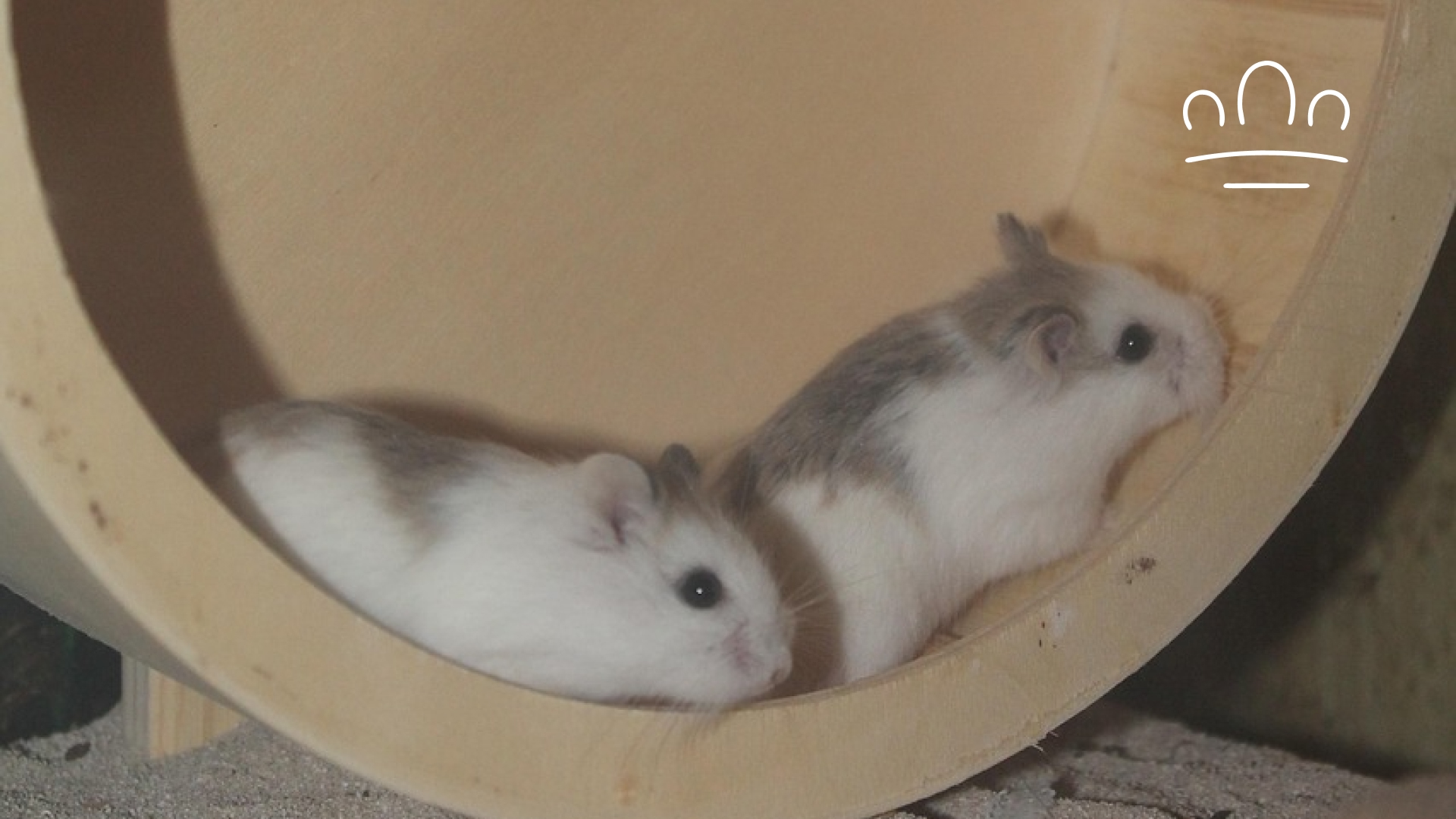
If your hamster sleeps in the wheel, it can look a bit strange.
You gave them a little house. You added bedding. Maybe even a cute hideout. And then your hamster chooses the exercise wheel as a bedroom.
Not exactly what the package picture promised.
The good news is that this is often not an emergency. Hamsters do odd things, especially when they are new, stressed, too warm, too exposed, or simply not impressed with the sleeping options we gave them.
But it is still worth paying attention, because a hamster sleeping in the wheel may also be telling you something about their cage setup.
Is it normal for a hamster to sleep in the wheel?
Sometimes, yes.
A hamster may sleep in the wheel for a few simple reasons: it feels safe there, it smells familiar, the hideout is not comfortable, the bedding is not deep enough, or the cage is too exposed or warm.
It can also happen with a new hamster who has not yet decided where “home” is.
“A hamster sleeping in the wheel is not automatically a problem. But I would always look at the whole setup: bedding depth, hiding places, temperature, noise, and whether the hamster has a quiet place to rest,” says a veterinary consultant for Pet-scope.
So the question is not only: “Why is my hamster sleeping there?”
The better question is: “Does my hamster have a better place to sleep, and do they feel safe using it?”
1. The wheel feels safe because it smells like them
Hamsters rely a lot on smell. If your hamster spends many hours running in the wheel, the wheel smells familiar. It becomes part of their territory.
So, in a very hamster way, the wheel may feel like a known and safe place.
This can be especially true after cage cleaning. If too much bedding is removed at once, the cage may suddenly smell different. The wheel might still smell more like “home” than the rest of the cage.
That does not mean you should never clean the cage. Of course you should. But for many hamsters, it helps not to remove every familiar scent all at once.
2. The hideout may not feel good enough
Sometimes the answer is very simple: the hamster does not like the hideout.
Maybe it is too small. Maybe it is too open. Maybe it smells strange. Maybe it is made of plastic and gets warm inside. Maybe it is placed in a busy corner of the cage.
Hamsters are prey animals. They usually like places that feel hidden, dark, and protected. A cute house that looks nice to us may not feel safe to them.
A better hideout is usually simple: dark, stable, easy to enter, and not too exposed.
If your hamster keeps sleeping in the wheel, try adding another hideout in a quieter part of the cage. Do not remove the old one immediately. Just give them options.
3. The bedding may not be deep enough
Hamsters are not little decorations for a tiny cage. They are natural diggers and burrowers.
If the bedding is too shallow, your hamster may not be able to make a proper nest or tunnel. Then the wheel becomes one of the few places that feels separate from the open cage.
This is one of the most common setup issues with hamsters: the cage may have toys, a wheel, and a food bowl, but not enough bedding for real hamster behavior.
Blue Cross recommends giving hamsters enough suitable bedding to burrow and create tunnels and nests. This matters because burrowing is not a luxury for hamsters. It is part of how they feel safe.
If your hamster sleeps in the wheel often, try increasing the bedding depth and adding soft, safe nesting material.
Do not use fluffy cotton-style nesting material. It can be dangerous if swallowed or wrapped around tiny limbs. Paper-based bedding and plain unscented toilet paper torn into strips are usually safer options.
4. The cage may be too bright, noisy, or exposed
Hamsters need a quiet place to sleep during the day.
If the cage is in a busy room, near a TV, near children playing, close to a window, or in direct sunlight, your hamster may not relax properly in the usual sleeping area.
The wheel might feel more enclosed, or it may simply be the place where your hamster feels they can curl up quickly.
It is not always logical to us. But hamsters do not read cage setup guides. They choose what feels safe in that moment.
The PDSA hamster care guide covers the importance of a suitable home, safe bedding, toys, diet, and health basics for pet hamsters.
A simple check: can your hamster sleep during the day without being disturbed all the time?
5. The hamster may be too warm
Sometimes hamsters avoid enclosed houses because they feel too warm inside.
A plastic hideout, especially in a warm room, may not be very comfortable. The wheel may feel cooler or more open.
This does not mean the wheel is an ideal bed. But it may explain why your hamster chooses it.
Keep the cage away from direct sun, radiators, heaters, and damp or drafty places. Hamsters need a stable, comfortable environment.
If the room is very hot, your hamster may become uncomfortable. If they seem weak, very still, breathing strangely, or not acting normally, contact a vet.
6. Your hamster is new and still settling in
New hamsters often behave a bit strangely at first.
They hide in odd places. They freeze. They sleep somewhere unexpected. They run a lot at night. They may avoid the house you carefully picked for them.
This does not mean you did something wrong.
Moving to a new home is a big change for a tiny animal. New smells, new sounds, new hands, new cage, new everything.
Give your hamster time. Keep the environment calm. Do not keep lifting the house to “check” if they are sleeping there. That can make the hideout feel unsafe.
For the first few days, boring is good. Food, water, quiet, bedding, hiding places, and patience.
Should I stop my hamster from sleeping in the wheel?
Not by force.
Do not block the wheel suddenly unless it is unsafe or causing a clear problem. A wheel is important enrichment for most hamsters, especially because they are active at night.
Instead, improve the sleeping options.
Try this:
- Add a darker, more private hideout
- Increase bedding depth
- Add safe nesting material
- Move the hideout to a quieter corner
- Avoid over-cleaning all bedding at once
- Check that the wheel is the right size and has a solid running surface
- Keep the cage away from direct sun, loud noise, and drafts
When should you worry?
A hamster sleeping in the wheel is not usually worrying by itself.
But call a veterinarian, ideally one experienced with small pets or exotic pets, if you notice:
- Your hamster stops eating or drinking
- They seem weak, cold, very still, or unusually slow
- They are breathing strangely
- They have diarrhea or a wet-looking tail area
- They are losing fur or scratching a lot
- They suddenly stop using the wheel completely
- They sleep in odd places and also seem unwell
- There is any sudden behavior change that does not feel normal for your hamster
Hamsters are small, and small animals can become unwell quickly. So it is better to ask a vet early if something feels off.
For general health warning signs and hamster disease information, the MSD Veterinary Manual gives an overview of hamster health issues and when proper care matters.
The Pet-scope take
If your hamster sleeps in the wheel, do not panic.
It may be just a strange little habit. Or your hamster may be saying, in the only way they can, “I do not love my bedroom.”
Look at the basics first: deeper bedding, better hideouts, less noise, stable temperature, and a cage that lets your hamster behave like a hamster.
And yes, sometimes they will still choose the wheel.
Because hamsters are tiny, dramatic, nocturnal landlords who make their own decisions.
As long as your hamster is eating, drinking, active at night, grooming normally, and not showing signs of illness, sleeping in the wheel is often not a big problem.
But if the behavior appears suddenly with other symptoms, or if your hamster seems unwell, contact a veterinarian.
Disclaimer
This article is for general informational purposes only and is not a substitute for professional veterinary advice, diagnosis, or treatment. If your hamster seems unwell, stops eating or drinking, has diarrhea, breathing problems, weakness, injury, or sudden behavior changes, contact a licensed veterinarian or an emergency veterinary clinic.