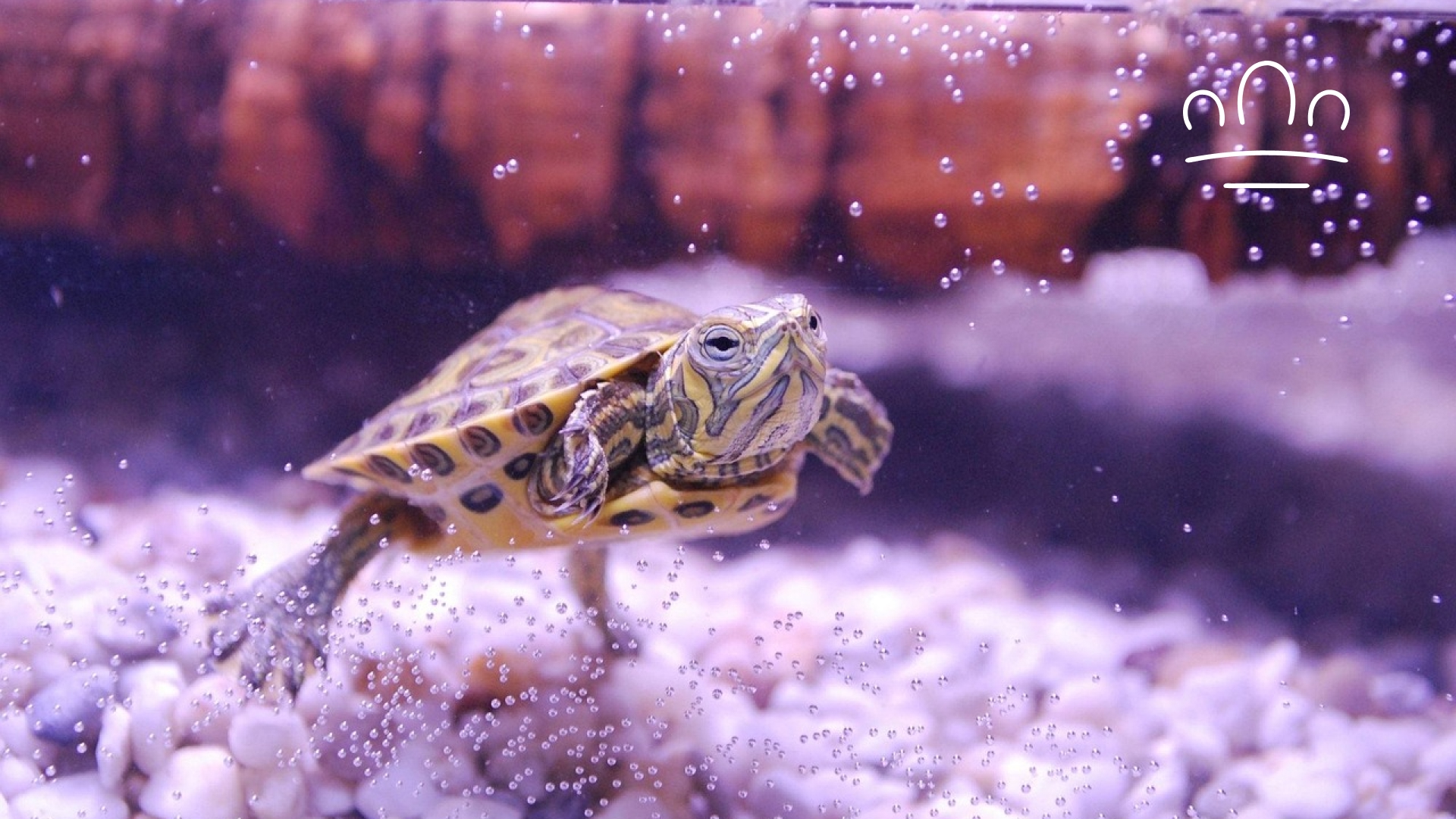
You walk past the aquarium, and your turtle immediately swims toward the front. Then the scratching begins.
They may paddle against the glass, scrape it with their front claws, push their face toward the same corner or repeat the movement whenever you enter the room.
So, why does your turtle scratch the glass?
Several explanations are possible. Your turtle may expect food, react to movement outside the tank, try to move through a transparent barrier or repeat a behavior that has gained attention before. Persistent scratching can also suggest that the enclosure, water quality, basking area or temperature needs closer inspection.
This article focuses mainly on aquatic and semi-aquatic pet turtles kept in tanks, including sliders, terrapins, painted turtles and similar species. Tortoises and land-dwelling box turtles have different housing needs, so species-specific veterinary guidance remains essential.
Why Does My Turtle Scratch the Glass?
Your turtle may scratch the glass because the front of the tank has become the most stimulating part of the enclosure.
Food appears there. People move past it. Light and reflections change throughout the day. The area may also seem like a possible route into the room beyond the tank.
When scratching happens only as you approach, food anticipation or learned attention-seeking becomes more likely. If it continues for long periods when nobody is nearby, examine the habitat more closely.
“Glass scratching is not a diagnosis by itself. Owners should look for a pattern: when it happens, what the turtle does immediately before and afterward, and whether appetite, activity, swimming, basking or appearance have changed,” says a veterinary consultant for Pet-Scope.
The same visible behavior can have different causes. A turtle paddling excitedly before feeding is not necessarily experiencing the same problem as a turtle that spends hours pushing against one wall.
Is It Normal for a Turtle to Scratch the Tank Glass?
Occasional glass scratching can be normal, particularly when your turtle sees you preparing food or becomes active during a familiar part of the day.
The behavior is usually less concerning when your turtle:
- scratches mainly when someone approaches the tank
- stops after a short period
- swims and dives normally
- uses the basking area regularly
- eats with a normal appetite
- has clear eyes and normal breathing
- shows no wounds on the feet, face or shell
However, repetitive activity deserves attention when the turtle rarely settles, repeatedly strikes the same area, damages the skin or claws, or has stopped following normal eating and basking patterns.
Instead of asking only whether the scratching is normal, ask whether the rest of the turtle’s day looks normal too.
Your Turtle May Be Trying to Move Through the Glass
Glass creates a boundary that is physically solid but visually open.
Your turtle can see the room, light and movement beyond the tank. They may repeatedly approach that visible space even though the wall prevents them from reaching it.
This does not necessarily mean your turtle is consciously trying to “escape captivity.” The animal may simply continue swimming or walking toward something it can see.
Look at where the behavior occurs. Does your turtle always scratch the same clear side? Is that side facing an open room, window, doorway or another pet?
As a simple test, place an opaque background on the outside of part of the glass for several days. Do not cover the top or reduce necessary ventilation. If scratching decreases in that area, visual stimulation beyond the tank may have contributed.
Could Your Turtle Be Reacting to Its Reflection?
A reflection is another possible explanation, especially when lighting inside the tank is brighter than the room outside.
Your turtle may see movement that resembles another animal or may repeatedly investigate the reflected image. Because reflections change with room lighting, the behavior may appear only at certain times of day.
Try observing the tank from your turtle’s level. Reflections that are barely visible from above may be clearer close to the glass.
You can test the possibility by:
- adding an aquarium background to the outside of the panel
- moving bright room lights that face the tank
- closing curtains if sunlight creates strong reflections
- changing the angle of nearby lamps
- keeping other reflective objects away from the glass
Make one change at a time. Otherwise, you may not know which adjustment affected the behavior.
Your Turtle May Scratch the Glass When It Sees You Because It Expects Food
Many pet turtles become noticeably more active when a familiar person approaches the enclosure.
You may be the person who opens the lid, collects the food container and places the meal into the water. Over time, your appearance can become part of the feeding signal.
Research involving Florida red-bellied turtles showed that turtles can learn visual cues associated with obtaining food. The peer-reviewed study found that turtles learned to approach a visual cue that indicated a food reward.
Therefore, a turtle that becomes active at the front of the tank when you enter may be responding to a learned expectation rather than an immediate welfare problem.
Watch for a clear pattern:
- scratching begins when you enter the room
- the turtle follows your movement along the glass
- activity increases when you touch the food container
- the behavior stops after feeding or after you leave
That pattern strongly suggests anticipation. It does not prove the turtle needs another meal.
Should You Feed a Turtle Every Time It Scratches the Glass?
No. Responding with food every time can strengthen the behavior and lead to overfeeding.
Your turtle may quickly learn that scratching at the front of the tank makes food appear. Once that connection forms, the turtle can repeat the behavior even after receiving an appropriate meal.
Follow a species-, age- and health-appropriate feeding plan rather than allowing the scratching to determine portions.
PetMD identifies overfeeding as a common mistake in pet turtle care and explains that an unsuitable diet can contribute to obesity and other health problems.
Because turtle diets vary widely by species and life stage, ask a reptile-experienced veterinarian to help you determine:
- how often your turtle should eat
- which commercial food is suitable
- the correct balance of plants and animal-based food
- whether calcium or other supplementation is needed
- how much food should be offered at each meal
A turtle can look extremely enthusiastic about food without being nutritionally deprived.
Could the Turtle Tank Be Too Small?
Persistent movement along the glass can sometimes indicate that the usable space is inadequate.
A turtle must be able to swim, turn, dive and reach the basking area without constantly touching the walls or bottom. The enclosure also needs to remain suitable as the animal grows.
The RSPCA’s terrapin guidance states that the water area should allow the animal to swim without touching the sides or bottom or constantly breaking the surface. It also recommends planning for the turtle’s adult size rather than only its size when purchased.
Tank requirements differ by species. Still, warning signs that the enclosure deserves review include:
- the turtle can cross the entire tank with only a few strokes
- turning around looks difficult
- the basking platform takes up most of the usable area
- two turtles repeatedly compete for the same space
- the animal has clearly outgrown the setup
- water becomes dirty very quickly despite maintenance
Do not rely solely on the tank label or advice given when the turtle was small. Many commonly sold aquatic turtles become much larger than new owners expect.
Check Whether the Basking Area Is Easy to Reach
An aquatic turtle needs a dry area where the entire body can leave the water and receive appropriate heat and ultraviolet light.
If the ramp is unstable, too steep or slippery, your turtle may repeatedly swim along the tank edge while trying to find another exit from the water.
Inspect the basking area from the turtle’s perspective:
- Can the turtle climb onto it without repeated failed attempts?
- Is it large enough to support the entire body?
- Does it remain dry?
- Is the ramp securely attached?
- Can the turtle leave the area easily?
- Are heat and UVB positioned correctly above it?
Do not guess temperatures by touching the water or basking platform. Use suitable thermometers and follow recommendations for your turtle’s exact species.
Incorrect Water or Basking Temperature Can Change Turtle Activity
Turtles are ectothermic, which means the environment strongly affects their body temperature, digestion and activity.
A turtle may become unusually inactive when conditions are too cold. Excessive heat can also make the animal restless or push it toward cooler areas.
The ideal temperatures vary by species, age and health. Therefore, use separate measuring equipment for the water, basking surface and cooler zone.
The MSD Veterinary Manual explains that reptiles have strict housing requirements for temperature, lighting, water and sanitation because they cannot regulate body temperature in the same way mammals do.
Check whether:
- the water heater is working correctly
- the heater has a protective guard
- the basking lamp is controlled and positioned safely
- temperatures are measured at the turtle’s level
- the turtle can choose between warmer and cooler areas
- direct sunlight is overheating the tank
Never place an aquarium in direct sunlight without carefully controlling temperature. A glass tank can heat rapidly.
Your Turtle Needs Appropriate UVB Lighting
Visible light and heat alone do not provide everything an aquatic turtle needs.
UVB helps turtles produce vitamin D3, which supports calcium absorption. Light passing through a household window does not provide a reliable substitute because glass filters important ultraviolet wavelengths.
VCA warns that insufficient UVB can predispose turtles to metabolic bone disease.
Review the UVB setup if:
- the bulb is not designed for reptiles
- glass or plastic sits between the lamp and turtle
- the bulb is older than the manufacturer’s replacement interval
- the lamp is too far from the basking surface
- the turtle cannot move into shade
UVB output is not visible to the human eye. A lamp can still appear bright after its useful UVB output has fallen.
Could Poor Water Quality Make Your Turtle Restless?
Water quality should always be checked when an aquatic turtle repeatedly pushes against the tank or changes its normal behavior.
Turtles produce a considerable amount of waste. Uneaten food, feces and organic material can quickly reduce water quality when the filter is inadequate or maintenance is irregular.
Check:
- whether the filter is suitable for the volume of water and turtle waste
- whether filter media is maintained correctly
- the water temperature
- ammonia, nitrite and nitrate levels
- whether uneaten food is removed
- whether partial water changes happen regularly
- whether the water source requires conditioning
Clear water is not automatically clean water. Harmful dissolved waste can be present even when the tank looks visually acceptable.
Aquatic turtle care is species-specific, so consult a reptile veterinarian or experienced aquatic animal professional when setting filtration and testing routines.
Your Turtle May Need More Cover and Environmental Variety
A bare tank offers few choices beyond swimming from one wall to another.
Appropriate environmental features can help the turtle explore, rest and move between exposed and sheltered areas. However, every item must be safe, stable and suitable for the species.
Possible additions include:
- a secure basking area
- visual cover near part of the tank
- turtle-safe plants
- large, stable rocks that cannot be swallowed
- safe structures that create different swimming routes
- a sheltered resting area that cannot trap the turtle underwater
Do not overcrowd the tank. A decoration that looks attractive may reduce swimming space, trap debris or create a drowning hazard.
VCA cautions that small stones and gravel may be swallowed and cause intestinal obstruction. It also recommends using only plants and objects confirmed to be safe for turtles.
Could Another Turtle Be Causing the Glass Scratching?
Housing more than one turtle can create competition for food, basking areas and space.
One turtle may remain at the glass because another animal controls the preferred basking platform or repeatedly approaches during feeding.
Look for:
- biting or chasing
- one turtle blocking the basking area
- unequal access to food
- scratches or wounds
- one turtle hiding or avoiding part of the tank
- repeated climbing on top of another turtle
A larger tank does not always solve incompatibility. Some turtles may need separate housing.
Could a Female Turtle Be Looking for a Place to Lay Eggs?
A mature female turtle can produce eggs even without a male present.
If she has no suitable nesting area, she may become unusually restless, repeatedly attempt to climb, push against the enclosure or search for a place to dig.
Glass scratching alone does not prove that a turtle is carrying eggs. However, reproductive behavior becomes more relevant when the turtle is an adult female and the restlessness is new.
Contact a reptile-experienced veterinarian if a female turtle:
- becomes persistently restless
- repeatedly tries to climb out
- makes digging movements
- stops eating
- appears weak
- strains without laying
- develops swelling or a vent prolapse
Do not squeeze the abdomen or attempt to remove an egg yourself. A veterinarian may need to perform an examination and diagnostic imaging.
Can Scratching the Glass Injure a Turtle?
Occasional contact may not cause harm, but persistent rubbing can damage the face, skin, claws or shell edges.
Inspect your turtle regularly for:
- redness around the nose or face
- raw skin
- broken or bleeding claws
- swelling
- shell chips or cracks
- difficulty using a limb
Also inspect the tank for sharp silicone edges, damaged decorations or gaps where a claw could become trapped.
VCA advises that shell fractures, wounds and abnormal shell changes should receive veterinary attention because trauma can lead to infection and deeper tissue damage.
How Can You Find Out Why Your Turtle Is Scratching the Glass?
Keep a short record for several days.
Note:
- the time scratching begins
- whether a person is present
- whether feeding usually happens nearby
- which side of the tank the turtle uses
- water and basking temperatures
- water test results
- whether the turtle has basked that day
- whether another animal is nearby
- how long the behavior lasts
- what makes it stop
A simple camera can show what happens when nobody is in the room. If scratching occurs only around people, learned food anticipation becomes more likely. If it continues for hours during an empty room, habitat conditions deserve closer investigation.
What Can You Do When Your Turtle Scratches the Glass?
Start with the environment rather than trying to stop the turtle directly.
- Review tank size: make sure the enclosure suits the species and expected adult size.
- Test the water: do not judge quality only by appearance.
- Measure temperatures: check water, basking and cool areas with suitable equipment.
- Inspect UVB lighting: confirm bulb type, age, distance and placement.
- Check the basking ramp: make sure it is stable and easy to climb.
- Reduce reflections: test an opaque background on the outside of one or more panels.
- Follow a feeding plan: avoid rewarding every scratching session with food.
- Add safe environmental variety: create cover and swimming routes without overcrowding the tank.
- Observe tank mates: separate turtles when aggression or resource competition occurs.
- Consult a reptile veterinarian: seek species-specific advice when the cause remains unclear.
Change one major factor at a time when the turtle is otherwise healthy. This makes it easier to identify which adjustment helps.
What Should You Avoid When a Turtle Scratches the Tank?
Do not punish the behavior.
A turtle will not understand shouting, tapping the aquarium or shaking the enclosure as a useful correction.
Avoid:
- hitting or tapping the glass
- spraying the turtle
- removing food for long periods as punishment
- taking the turtle out for unsupervised roaming
- placing the tank in direct sunlight
- adding random chemicals to the water
- changing temperatures suddenly
- using sharp or unstable decorations
- releasing a pet turtle outdoors
Moving the turtle onto the floor whenever it scratches can also reinforce the behavior if roaming is rewarding. More importantly, unsupervised turtles can fall, escape, become chilled or suffer injuries from other pets.
When Should Turtle Glass Scratching Concern You?
Contact a veterinarian experienced with reptiles if the scratching is persistent, suddenly begins without an obvious reason or appears with other changes.
Warning signs include:
- loss of appetite
- unusual lethargy
- difficulty swimming or remaining level in the water
- open-mouth breathing
- wheezing, bubbles or nasal discharge
- swollen or closed eyes
- soft, damaged or unusually shaped shell areas
- skin wounds or bleeding claws
- failure to bask
- repeated straining
- weakness or abnormal movement
- a prolapse from the vent
Reptiles may show subtle signs before becoming obviously ill. A change from your turtle’s normal behavior can therefore be significant.
What Your Turtle’s Zodiac Sign Might Say About Glass Scratching
From the Pet-Scope point of view, your turtle’s zodiac sign can add a playful personality layer to the glass-scratching mystery. Astrology cannot diagnose a housing or health problem, but it can describe the style of the performance.
Fire-sign turtles — Aries, Leo and Sagittarius — may scratch with great determination the moment they see movement outside the tank. Aries wants action, Leo wants an audience, and Sagittarius is convinced that something interesting exists beyond the glass.
Earth-sign turtles — Taurus, Virgo and Capricorn — may react when the expected routine changes. Taurus remembers feeding time, Virgo notices that the basking ramp moved, and Capricorn continues working at the same corner with impressive discipline.
Air-sign turtles — Gemini, Libra and Aquarius — may respond to every passing person, reflection and shifting light. The world outside the aquarium provides an endless supply of visual information.
Water-sign turtles — Cancer, Scorpio and Pisces — may be especially responsive to familiar movement and atmosphere. They might wait near the glass for a trusted person or retreat when the room becomes too busy.
Explore all twelve playful personalities in our Turtle Zodiac Signs guide or browse the wider Small Pet Zodiac Signs guide.
Want a reading for your turtle?
Choose “Other pet” in the Pet-Scope Pet Horoscope Generator, enter “turtle,” add a few personality notes, and create a playful zodiac-style reading for your quietly determined companion.
Quick Questions About Turtles Scratching the Glass
Why does my turtle scratch the glass when it sees me?
Your turtle may associate your appearance with food or activity. If the behavior begins only when you approach and stops soon afterward, learned anticipation is a likely explanation.
Why does my turtle scratch the glass after eating?
The behavior may continue because scratching has previously led to more food or attention. Check portions and follow a consistent feeding plan instead of automatically offering another meal.
Why does my turtle keep swimming into the glass?
The turtle may be responding to the view beyond the tank, a reflection, limited space or unsuitable environmental conditions. Review the enclosure and test an opaque background on the outside of the glass.
Why does my turtle scratch one corner of the tank?
That corner may face movement, light or a familiar feeding location. It could also offer the clearest view beyond the aquarium. Inspect the area for reflections and sharp surfaces.
Why does my turtle scratch the glass at night?
Reflections can become stronger after room lighting changes. Nighttime activity may also relate to temperature, disturbance or the turtle’s routine. Check lighting schedules and environmental measurements.
Does glass scratching mean my turtle wants to come out?
Not necessarily. The turtle may see movement outside or expect food. Removing the turtle every time can create another learned association and may expose it to temperature changes or injury.
Can a turtle recognize its owner?
Turtles can learn visual cues associated with food and routine. A pet turtle may respond differently to familiar people, although approaching the glass does not prove a human-like emotional interpretation.
Will a bigger tank stop glass scratching?
A larger, better-designed enclosure can help when limited space contributes to the behavior. However, food anticipation, reflections and other triggers may continue, so consider the full pattern.
The Pet-Scope Take
If your turtle scratches the glass, begin by observing when it happens.
A turtle that rushes forward only when you appear may have learned that people predict food. A turtle that pushes against the same wall for hours may be reacting to reflections, limited space or a habitat problem.
Review the essentials: tank size, water quality, temperature, UVB, basking access, feeding, visual cover and relationships with tank mates.
When the turtle remains healthy and the behavior is brief, glass scratching may simply be part of an enthusiastic routine. Persistent scratching, injuries or changes in appetite, breathing, swimming or basking require more attention.
Your turtle may appear to be asking one urgent question:
Is that food, freedom, another turtle—or just my own reflection?
Disclaimer
This article is for general informational and entertainment purposes only. It is not a substitute for professional veterinary advice, diagnosis or species-specific husbandry guidance. If your turtle stops eating, has trouble breathing or swimming, develops swollen eyes, shell damage, wounds, weakness, reproductive problems or any sudden behavior change, contact a licensed veterinarian experienced with reptiles.