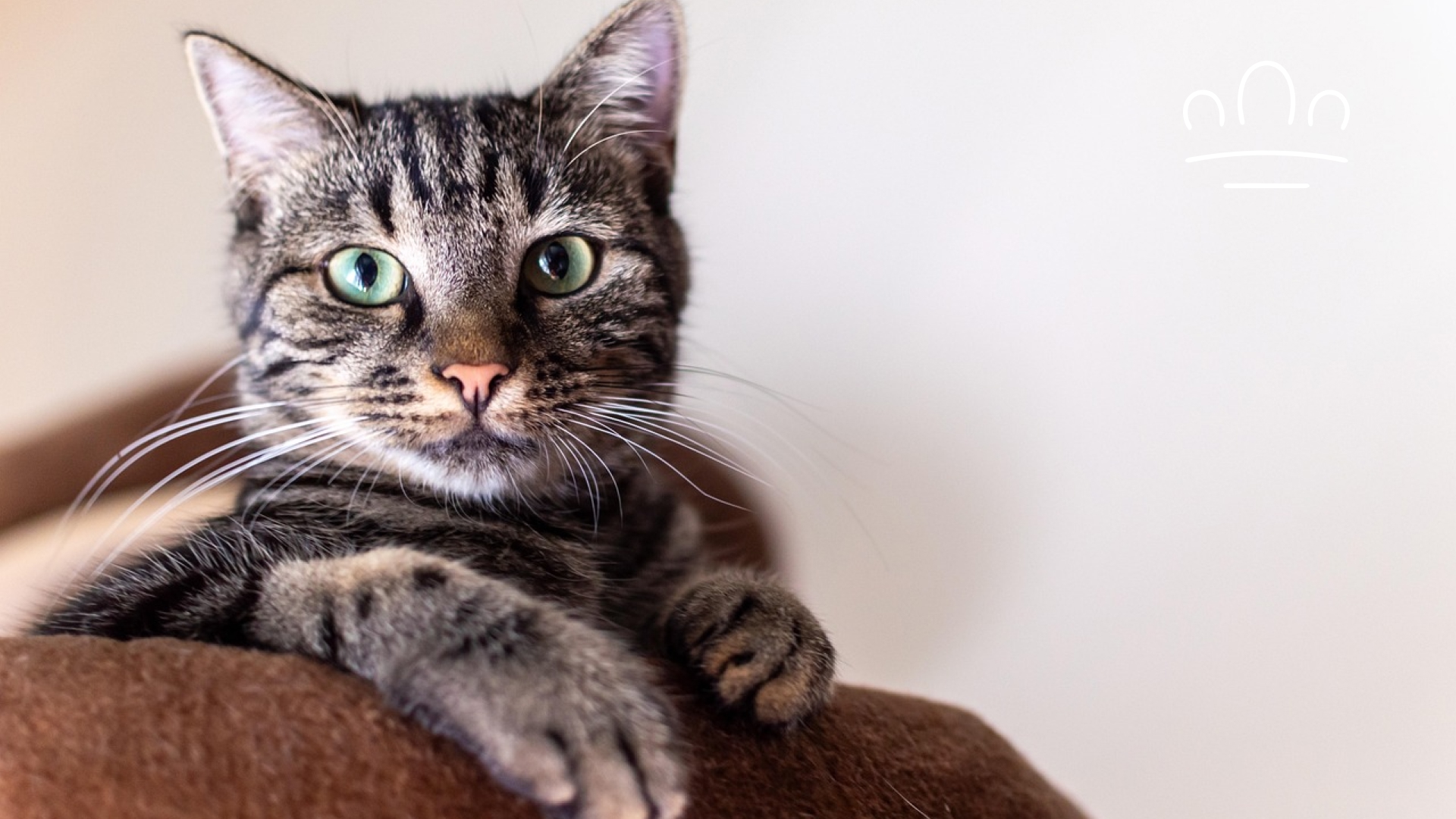
You look up from your phone and notice your cat sitting on the other side of the room, watching you in complete silence.
They may be resting on a chair, peeking through a doorway or sitting upright with their eyes fixed in your direction. Sometimes they slowly blink. At other times, they seem to be waiting for you to do something.
So, why does your cat stare at you from across the room?
In most cases, your cat is observing, communicating or anticipating what happens next. They may want food, attention or play. They could also be enjoying your company from a comfortable distance, tracking movement around the room or listening to a sound near you.
Why Does My Cat Stare at Me From Across the Room?
A cat staring from across the room is often gathering information.
From that position, your cat can see where you are, what you are doing and whether anything interesting is about to happen. They can remain socially connected without sitting on your lap or asking for direct contact.
“A cat watching from across the room is often displaying normal observational or social behavior. The meaning depends on the full picture, including the eyes, ears, whiskers, tail, posture and what usually happens after the stare,” says a veterinary consultant for Pet-Scope.
A relaxed cat with soft eyes may simply be comfortable in your presence. A tense cat with wide pupils, flattened ears and a rapidly moving tail may be communicating something very different.
Is It Normal for a Cat to Watch You From Another Room?
Yes. It is usually normal for a cat to watch their owner from another room or from the opposite side of the same room.
Cats often prefer to observe before deciding whether to approach. A distant chair, shelf or doorway gives them a useful view while preserving personal space.
The behavior is generally less concerning when your cat:
- has a loose and comfortable posture
- rests, grooms or falls asleep afterward
- blinks normally
- responds to your voice or movement
- continues eating, playing and using the litter box normally
- approaches you voluntarily at other times
- does not appear confused, frightened or physically uncomfortable
Some cats are naturally more watchful than others. One cat may spend the evening on your lap, while another prefers to share the room from a carefully selected observation point.
What Does a Cat’s Stare Mean?
A stare does not have one universal meaning.
Its interpretation depends on the situation and the rest of the cat’s body language. The same cat may look at you differently when relaxed, hungry, playful, uncertain or annoyed.
Ask a few quick questions:
- Are the eyes soft or wide?
- Are the pupils small, medium or fully dilated?
- Are the ears relaxed, forward, sideways or flattened?
- Is the tail still, gently moving or lashing?
- Is the body loose, crouched or rigid?
- What time is it?
- What normally happens next?
Context turns a mysterious stare into a much more understandable message.
Your Cat May Be Waiting for You to Do Something
Cats quickly learn the small sequences that organize a household.
You close the laptop, stand up and prepare dinner. You put on certain shoes and open the garden door. You move toward a cupboard and take out a toy.
After enough repetition, your cat may begin watching before the sequence starts.
They could be waiting for:
- you to serve a meal
- a play session
- a door to open
- you to move to another room
- the evening routine to begin
- access to a favorite chair or blanket
Notice what your cat does when you finally stand up. If they immediately run toward the kitchen, door or toy storage area, the stare was probably connected to an expectation.
Your Cat May Be Staring Because It Is Nearly Feeding Time
Food is one of the most common explanations for a focused stare.
Your cat may sit silently across the room because they know that dinner normally arrives soon. Some cats meow. Others follow their owners. A quieter cat may simply watch until the human remembers the schedule.
Cats Protection notes that cats can associate a person’s movements and daily routine with feeding. Repeatedly receiving food after a particular action makes the connection stronger.
Food anticipation becomes more likely when your cat:
- stares close to the usual mealtime
- looks between you and the kitchen
- walks toward the food area when you move
- becomes more vocal after eye contact
- waits near the bowl or food cupboard
Do not automatically offer an extra meal every time your cat watches you. Follow an appropriate feeding plan based on age, health, body condition and veterinary advice.
Your Cat May Want Attention Without Approaching You
Not every request for attention includes climbing onto a person.
A cat may stare because they want you to speak, move closer, offer a game or invite them to approach. Watching from a distance allows them to begin an interaction without committing to physical contact.
Try saying your cat’s name softly. You can also place a hand beside you or offer a slow blink.
If the cat walks over with a raised tail, rubs against you or settles nearby, social interaction may have been the goal.
A cat who remains in place may still enjoy being acknowledged. Some cats prefer quiet companionship and do not need every social moment to become a cuddle.
Your Cat May Be Enjoying Your Company From a Distance
Cats can be social without staying in constant physical contact.
Your cat may choose a resting place that allows them to see you while maintaining control over distance. This can be a comfortable compromise for an independent, cautious or easily overstimulated cat.
The cat may be relaxed if they:
- lie on one side or tuck their paws comfortably
- hold the ears in a natural forward position
- keep the whiskers relaxed
- blink or partly close the eyes
- groom calmly
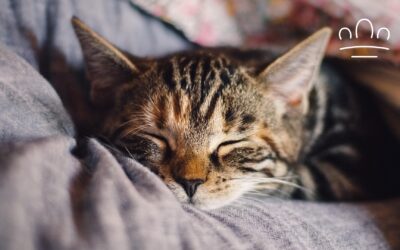
- eventually fall asleep while facing your direction
This type of stare may not be an urgent message. Your cat may simply prefer knowing where you are.
If your cat often moves from room to room with you, our guide to why cats follow their owners to the bathroom explores another way cats combine curiosity, companionship and learned routines.
Your Cat May Be Monitoring Your Next Movement
Humans are an important source of activity inside a cat’s environment.
Your movements can lead to food, play, opening doors, moving furniture or revealing a previously unavailable sleeping spot. Watching you is therefore practical.
A cat resting across the room may notice small signals such as:
- you putting down a phone
- changing your sitting position
- closing a computer
- reaching for keys
- looking toward the kitchen
- putting on shoes
By observing closely, your cat gets an early warning about the next household event.
This may explain why the stare ends the moment you stand. The cat has received the information they were waiting for.
Your Cat May Be Watching Something Near You
Sometimes you are not the true subject of the stare.
Your cat may have noticed:
- a small insect near your chair
- light moving across the wall
- a reflection from a screen or window
- a sound coming from behind you
- movement outside a nearby window
- another pet approaching quietly
Cats can detect subtle sights and sounds that humans overlook.
Follow the direction of your cat’s ears as well as their eyes. Ears rotating past you may suggest that the interesting event is somewhere nearby rather than directly in front of the cat.
Your Cat May Be Preparing to Play
A focused stare can appear before a play sequence.
Your cat may watch your feet, hands or clothing while deciding whether something is about to move. Their body may lower slightly, and the back legs may prepare for a quick movement.
Signs of playful anticipation can include:
- ears facing forward
- eyes fixed on a moving object
- a small movement at the tip of the tail
- a lowered front body
- the rear legs shifting into position
- short bursts of running or pouncing afterward
Redirect stalking toward an appropriate toy rather than encouraging attacks on hands or feet.
A wand toy can create distance between your body and the moving target. Allow your cat to chase, catch and briefly hold the toy during the game.
Why Does My Cat Stare at Me and Slowly Blink?
A slow blink is different from an intense, unbroken stare.
Your cat may gently narrow the eyes, close them for a moment and then reopen them. This often appears when the cat is resting and feels comfortable enough not to watch every movement continuously.
Context remains important. A cat may narrow or close the eyes because of stress, tiredness, pain or an eye problem. Look for relaxed ears, whiskers and posture before interpreting the blink as a social signal.
You can respond by slowly closing your own eyes, reopening them and turning your head slightly away. Do not move closer immediately unless the cat chooses to approach.
Should You Stare Back at Your Cat?
A prolonged, direct human stare can make some cats uncomfortable.
People naturally use eye contact during conversation. Cats may interpret intense unbroken eye contact differently, especially when they are nervous or unfamiliar with the person.
A friendlier response is to:
- relax your facial muscles
- partly close your eyes
- blink slowly
- turn your head slightly to the side
- let the cat decide whether to approach
Avoid walking directly toward a worried cat while maintaining eye contact. Give them space and an open route to move away.
How Can You Read the Body Language Behind a Cat’s Stare?
The eyes are only one part of the message.
A relaxed cat watching you
- soft or partly closed eyes
- natural-sized pupils for the lighting
- ears resting forward or slightly sideways
- loose facial muscles
- relaxed whiskers
- a still or gently curled tail
- a comfortable resting posture
A curious cat watching you
- eyes open and attentive
- ears pointing toward the activity
- whiskers slightly forward
- head raised
- body prepared to approach or investigate
An anxious or frightened cat watching you
- wide pupils
- ears turned sideways or backward
- a lowered or crouched body
- tense facial muscles
- whiskers held forward or flattened back
- a tucked tail or tail held close to the body
- readiness to hide or move away
An irritated or highly aroused cat watching you
- rigid posture
- hard, fixed gaze
- ears flattened or rotated backward
- tail lashing or striking the floor
- growling, hissing or low vocalization
- skin twitching or sudden movement
When the body looks tense, stop approaching and reduce the pressure. Allow the cat to move away without being followed.
Why Does My Cat Stare at Me With Big Pupils?
Pupil size changes for several reasons.
Low light naturally causes the pupils to expand. Excitement, fear, play and high emotional arousal can also produce wider pupils.
Therefore, large pupils alone do not explain the stare.
A playful cat may have enlarged pupils while crouching behind a toy. A frightened cat may show similarly wide pupils while holding the ears back and trying to hide.
Compare both eyes. Seek veterinary advice if:
- one pupil is noticeably larger than the other
- the pupils do not respond normally to changes in light
- the eyes appear cloudy, red or painful
- your cat bumps into objects
- the third eyelid becomes visible
- there is discharge or repeated squinting
Sudden eye changes should be assessed promptly rather than explained as personality or mood.
Why Does My Cat Watch Me From a Doorway?
A doorway offers a useful observation point.
From there, your cat can watch two spaces at once. They can see you while keeping an easy route into another room.
Doorways can also become part of familiar routines. Your cat may wait there because:
- you normally move through that door before feeding
- the doorway leads to a preferred room
- they want the door opened wider
- another animal is nearby
- the location provides distance and security
If multiple cats share the home, observe whether one animal regularly occupies doorways and prevents another from passing comfortably.
Could Staring Be Connected to Conflict With Another Cat?
In a multi-cat home, staring can sometimes be directed past you toward another cat.
A fixed gaze can be part of subtle social tension. One cat may watch a doorway, hallway, food area or litter-box route used by the other.
International Cat Care notes that a fixed stare can appear during conflict between cats, especially when combined with tense posture, blocking or avoidance.
Possible signs of hidden conflict include:
- one cat staring while another hesitates to enter
- blocking access to food, water or litter trays
- one cat spending more time hiding
- chasing that looks one-sided
- one cat leaving when the other arrives
- changes in appetite, grooming or toileting
Provide separated resources in different parts of the home rather than placing every bowl, bed and litter tray together.
Seek qualified behavioral advice if tension continues or either cat appears frightened.
Does a Cat Staring From Across the Room Mean Affection?
It can be part of a close relationship, but staring alone is not a perfect measure of affection.
A relaxed cat may feel comfortable watching someone they know well. Trust becomes more likely when the stare includes soft eyes, slow blinking, resting and voluntary approach.
However, food expectation, curiosity and play can produce similar attention.
Look at the broader relationship:
- Does your cat choose to spend time in the same room?
- Do they approach with a raised tail?
- Do they rub their face or body against you?
- Can they relax and sleep nearby?
- Do they seek interaction while also feeling comfortable alone?
The distant stare may be one small part of the bond rather than a secret message that can be translated on its own.
Is My Cat Judging Me From Across the Room?
The expression can certainly look judgmental.
Cats have facial features and resting positions that humans often interpret through human emotions. A still face may seem disapproving even when the cat is relaxed, sleepy or waiting for dinner.
There is no useful reason to assume that your cat is criticizing your choices.
They may be noticing that you opened a snack without offering them anything. That is not quite the same thing.
How Should You Respond When Your Cat Keeps Staring at You?
Begin by observing rather than reacting immediately.
Check the time, body language and surroundings. Then consider whether your cat may need something reasonable.
You can:
- Check basic needs: make sure water, litter facilities and the planned meal routine are in order.
- Offer a slow blink: keep your face relaxed and turn slightly away afterward.
- Invite rather than force contact: allow your cat to choose whether to approach.
- Offer appropriate play: use a wand or chase toy when the body language appears playful.
- Provide enrichment: climbing areas, hiding places, scratching surfaces and feeding activities can create useful choices.
- Respect requests for space: do not approach a tense or frightened cat.
- Keep routines consistent: predictability can reduce uncertainty and constant monitoring.
If every stare results in food, your cat may learn to stare more often. Respond according to their actual needs rather than the intensity of the performance.
When Should a Cat Staring From Across the Room Concern You?
A familiar observational habit is usually less concerning than a sudden change.
Contact a veterinarian if the staring appears together with:
- confusion or disorientation
- walking into walls or furniture
- unequal pupil size
- red, cloudy, swollen or painful-looking eyes
- repeated head pressing
- circling or loss of balance
- unusual vocalization
- weakness or reduced activity
- changes in appetite or drinking
- changes in litter-box use
- uncharacteristic aggression or hiding
- episodes of staring with loss of responsiveness
Older cats deserve particular attention when staring is accompanied by wandering, nighttime vocalization, altered sleep, confusion or difficulty recognizing familiar places.
Record a video when the behavior seems unusual. Note how long it lasts, whether your cat responds to their name and what happens immediately afterward.
What Your Cat’s Zodiac Sign Might Say About the Distant Stare
From a Pet-Scope point of view, your cat’s zodiac sign can add a playful personality layer to the silent observation. Astrology cannot diagnose anxiety, eye disease or a behavior problem, but it can describe the style of the stare.
Fire-sign cats — Aries, Leo and Sagittarius — may stare because they are waiting for the next event. Aries wants you to move, Leo expects you to notice the audience, and Sagittarius is deciding whether the room still contains enough entertainment.
Earth-sign cats — Taurus, Virgo and Capricorn — may monitor the household schedule. Taurus knows dinner is approaching, Virgo has noticed that something moved, and Capricorn is supervising the evening routine from a reliable position.
Air-sign cats — Gemini, Libra and Aquarius — may watch out of curiosity and social interest. Gemini wants information, Libra enjoys sharing the room, and Aquarius may stare for ten minutes before walking away without explanation.
Water-sign cats — Cancer, Scorpio and Pisces — may watch to maintain emotional contact. Cancer prefers knowing where you are, Scorpio studies every movement, and Pisces may slowly blink before drifting back to sleep.
Explore all twelve personalities in our Cat Zodiac Signs guide. You can also try our Pet Compatibility reading for a playful look at the dynamic between your sign and your cat’s.
Want a reading for your cat?
Choose your cat’s zodiac sign, add a few personality notes, and create a playful Pet-Scope reading based on their habits, moods and mysterious ways of watching the household.
Quick Questions About Cats Staring From Across the Room
Why does my cat stare at me while lying down?
Your cat may be resting while keeping track of your movement. Soft eyes, relaxed ears and a comfortable posture usually suggest calm observation rather than concern.
Why does my cat stare at me from another room?
The doorway may provide a safe observation point and a clear view of what you are doing. Your cat may also be waiting for you to move, open a door or begin a familiar routine.
Why does my cat stare at me without blinking?
A focused stare can accompany curiosity, food anticipation, play, fear or high emotional arousal. Check the ears, pupils, whiskers, tail and posture before deciding what it means.
Why does my cat stare at me and then look away?
Looking away can reduce social pressure. A relaxed cat may make brief eye contact and then return to resting, grooming or observing something else.
Why does my cat stare at me before jumping on me?
The cat may be judging distance and predicting movement before approaching or playing. Redirect repeated pouncing on hands or feet toward an appropriate interactive toy.
Why does my cat stare at me while I eat?
Your food, movement and established habits may attract attention. If staring has previously resulted in a bite from the table, your cat may be repeating a learned strategy.
Why does my cat stare at me at night?
Cats can be more active during evening and early-morning periods. Your cat may want play, food or access to another room, or may simply be awake while you are still.
Why does my cat suddenly stare behind me?
Your cat may see an insect, reflection or movement, or hear something you cannot detect. Check the surroundings, but seek veterinary advice if the behavior appears with confusion, imbalance or reduced responsiveness.
Why does my cat stare at me and meow?
The combination is likely a direct request. Food, attention, play, access or discomfort are possible explanations. The time, location and type of meow can provide additional clues.
Why does my cat stare at me when I wake up?
Your cat may have learned that waking leads to food, movement or attention. Remaining beside you and watching closely can be an effective way to detect the exact moment the morning routine begins.
The Pet-Scope Take
If your cat stares at you from across the room, the most likely explanation is that you are currently the most informative object in their environment.
You control doors, meals, toys and many important household routines. You also move unpredictably and occasionally produce an available lap.
Read the entire cat rather than focusing only on the eyes. Soft features and a comfortable body usually suggest relaxed observation. A rigid posture, flattened ears or lashing tail calls for more space.
Most distant staring is harmless. It may be curiosity, companionship, anticipation or a quiet request. Sudden changes, eye abnormalities, confusion or loss of responsiveness deserve veterinary attention.
Your cat may not be judging you.
They are simply watching closely enough to reach the kitchen before you do.
Disclaimer
This article is for general informational and entertainment purposes only. It is not a substitute for professional veterinary advice, diagnosis or behavioral assessment. If your cat develops sudden staring episodes, eye changes, confusion, loss of responsiveness, appetite changes, unusual aggression or any other significant change in normal behavior, contact a licensed veterinarian.