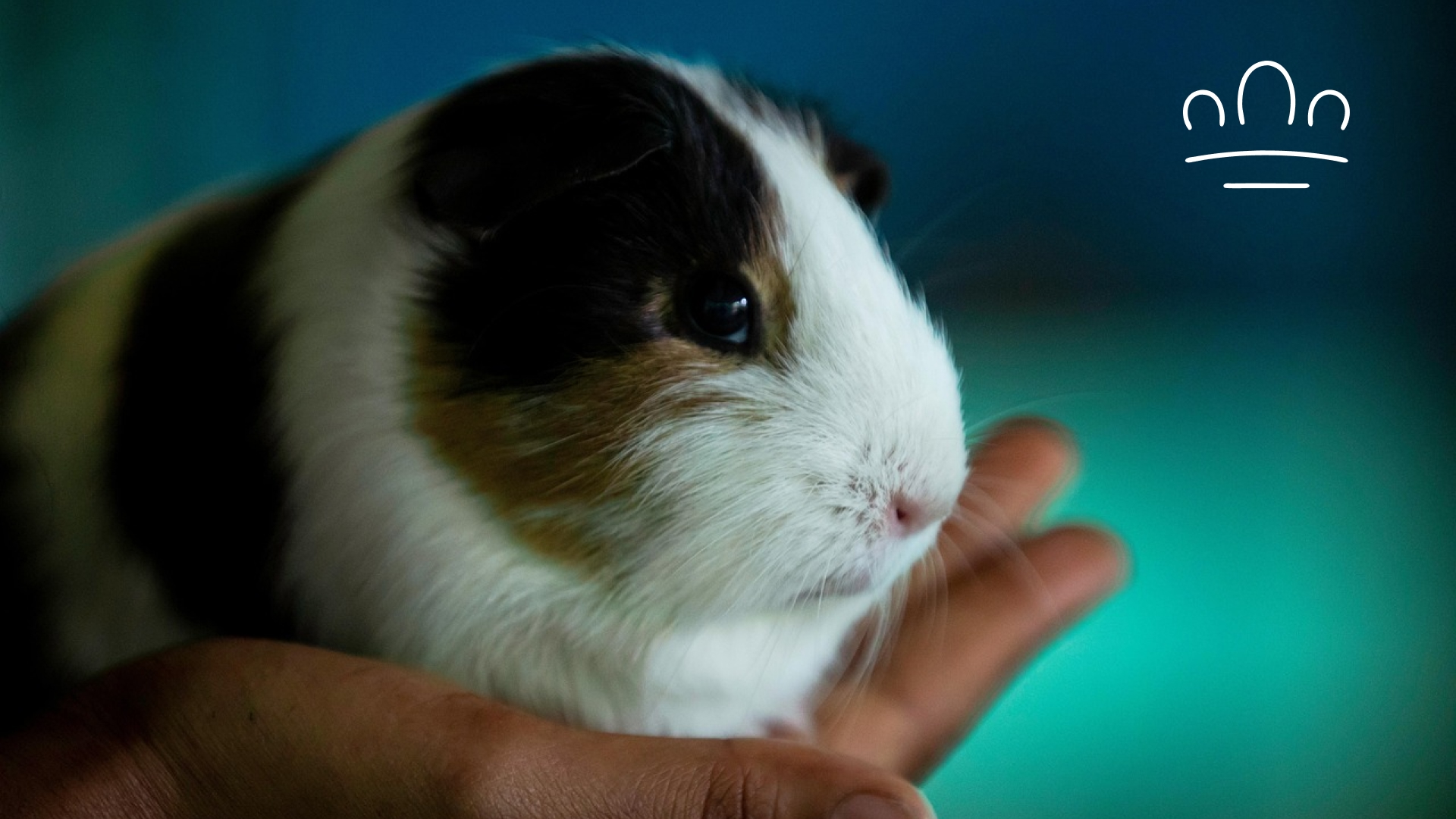
You hold out your hand, and your guinea pig begins giving one finger a series of tiny, careful licks.
They may lick during lap time, after taking food from your hand or while quietly investigating your skin. Sometimes the licking is followed by a gentle nibble, which can make the message even harder to interpret.
So, why does your guinea pig lick your fingers?
The most likely explanations are curiosity, an interesting taste or smell, food residue, a familiar social interaction or a learned way to get your attention. A relaxed guinea pig may also include licking in a calm grooming-like exchange, although the behavior alone cannot prove exactly what your pet is feeling.
Why Does My Guinea Pig Lick My Fingers?
Your guinea pig may lick your fingers because hands carry a large amount of useful information.
Your skin has a familiar scent. It may also carry traces of vegetables, hay, soap, sweat or another animal. Licking allows your guinea pig to investigate those tastes and smells at very close range.
In other situations, licking may appear during a relaxed social moment. Guinea pigs groom themselves and may groom compatible companions. A guinea pig that feels secure enough to remain beside you, sniff your hand and lick gently may be treating the interaction as familiar and non-threatening.
“Finger licking is usually harmless when the guinea pig is relaxed and behaving normally. It should be interpreted together with body posture, vocalizations, appetite and what was on the person’s hands immediately beforehand,” says a veterinary consultant for Pet-Scope.
The behavior often has more than one explanation. Your guinea pig may trust you and also like the faint taste of the vegetable you prepared five minutes earlier.
Is It Normal for a Guinea Pig to Lick Your Hand?
Yes. Occasional hand or finger licking can be normal guinea pig behavior.
It is generally less concerning when your guinea pig:
- approaches your hand voluntarily
- sniffs before licking
- has a loose, comfortable posture
- continues eating and exploring normally
- can move away whenever they choose
- does not appear frightened or physically uncomfortable
- licks only briefly rather than compulsively
The RSPCA explains that guinea pig behavior varies according to personality, age and past experience. It also advises owners to pay attention when a familiar behavior changes, since changes can reflect stress, boredom, injury or illness.
A guinea pig that licks calmly during a familiar interaction is different from one that suddenly begins licking, biting or behaving restlessly alongside other health or behavior changes.
Your Guinea Pig May Like the Taste or Smell of Your Skin
Guinea pigs use smell and taste to investigate their environment.
Your fingers may carry subtle traces of:
- fresh vegetables
- fruit
- hay or pellets
- another guinea pig
- another household pet
- soap or hand cream
- natural skin oils and sweat
Even when your hands look clean, they may still smell interesting to a guinea pig.
The licking may therefore be closer to a small taste test than an emotional statement. Your pet is gathering information using the senses available to them.
This explanation becomes especially likely when the licking happens after you have prepared food, refilled hay or handled a treat.
Why Does My Guinea Pig Lick My Fingers After I Handle Food?
Food residue is one of the simplest explanations.
A trace of bell pepper, cucumber or another familiar food may remain on your skin. Your guinea pig can often detect the smell long after you think it has disappeared.
They may lick the finger first and then begin a cautious nibble, apparently testing whether the rest of your hand is edible too.
Wash and rinse your hands before handling your guinea pig after preparing food. This reduces confusion and makes accidental nipping less likely.
If your guinea pig regularly licks when food is present, avoid rewarding every lick with another treat. Otherwise, licking your fingers may become part of a reliable food-request routine.
Our guide to why guinea pigs wheek when the fridge opens explores another way guinea pigs learn to connect human actions, sounds and smells with food.
Does My Guinea Pig Lick Me Because My Skin Is Salty?
It is possible that the taste of natural sweat or skin residue contributes to the behavior.
However, licking your hand does not prove that your guinea pig has a salt or mineral deficiency. A pet may simply find the taste interesting and repeat the investigation.
Do not add mineral supplements or a salt product to the enclosure solely because your guinea pig licks you. Supplements should be based on an appropriate diet and advice from a veterinarian experienced with guinea pigs.
A balanced guinea pig diet has much more important foundations:
- constant access to suitable hay or grass
- fresh drinking water
- measured guinea pig pellets
- appropriate fresh vegetables
- a reliable dietary source of vitamin C
The RSPCA advises that good-quality hay should make up most of a guinea pig’s diet, supported by fresh vegetables, suitable pellets and adequate vitamin C.
Finger licking should not be used as a nutritional test.
Could Finger Licking Be a Form of Guinea Pig Grooming?
Guinea pigs naturally spend time grooming themselves. Compatible guinea pigs may also engage in grooming-related social contact.
When a guinea pig licks your fingers during a calm interaction, it can resemble grooming. The behavior may be part of a familiar social exchange, particularly if the guinea pig voluntarily approaches and remains relaxed.
Still, it is better not to translate every lick directly as a kiss. Taste, scent, habit and curiosity may be involved at the same time.
Look at the complete interaction. A comfortable guinea pig may:
- approach without being chased
- sniff and lick gently
- rest or settle afterward
- accept calm stroking
- continue eating in your presence
- show no attempt to escape
Those signals suggest trust more reliably than licking alone.
Does a Guinea Pig Licking Your Fingers Mean They Trust You?
It can be consistent with trust, especially when the guinea pig chooses to approach your hand.
Guinea pigs are prey animals, so allowing a large human hand close to their face requires a degree of comfort. A nervous guinea pig is more likely to retreat, freeze or remain inside a shelter.
Trust is more likely when your guinea pig also:
- approaches when you enter the room
- takes food gently from your hand
- remains active while you are nearby
- relaxes during suitable handling
- responds to your voice or routine
- returns after being given the choice to leave
A guinea pig can trust you without licking, and one that licks may partly be responding to an interesting flavor. Consider the broader relationship rather than treating licking as a pass-or-fail affection test.
Your Guinea Pig May Have Learned That Licking Gets Attention
Licking often makes a person react.
You may laugh, speak to your guinea pig, begin stroking them or offer a piece of food. That response can make the behavior worth repeating.
The learned sequence may become:
I lick the finger. The human immediately interacts with me.
This does not mean your guinea pig is being manipulative. Animals naturally repeat behaviors that lead to predictable outcomes.
Watch what happens after the licking begins. Your guinea pig may:
- raise their head for attention
- move toward a pocket or hand holding food
- continue licking until you respond
- start wheeking
- nudge the hand
- walk away once the expected interaction occurs
If you do not want licking to become a constant food request, offer attention and food according to a routine rather than automatically rewarding every lick.
Why Does My Guinea Pig Lick Only One Person?
Your guinea pig may have a different history with each person in the household.
One person may provide most meals. Another may handle the guinea pig more gently or spend more quiet time near the enclosure. Hands also differ in scent, temperature and the products used on the skin.
Your guinea pig may prefer one person because that person:
- usually brings vegetables
- moves more slowly
- holds them more securely
- allows them to approach voluntarily
- uses fewer strongly scented products
- responds more consistently to licking
This preference does not necessarily create a ranking of who the guinea pig loves most. Different people can become associated with different experiences.
Why Does My Guinea Pig Lick Me During Lap Time?
Lap time combines warmth, scent, contact and a relatively still human surface.
Your guinea pig may lick because your fingers are nearby and easy to investigate. They may also be settling into a familiar routine that includes gentle interaction.
Make sure lap time remains safe and voluntary. Guinea pigs can become frightened and attempt to jump, so sit close to the floor or another secure surface.
Signs that your guinea pig may want the session to end include:
- persistent squirming
- trying repeatedly to climb away
- rapid or tense movement
- teeth chattering
- hard nipping
- urinating after becoming restless
- refusing favorite food while being held
Do not continue holding a frightened guinea pig merely because they licked you earlier in the session.
Why Does My Guinea Pig Lick and Then Nibble My Finger?
A gentle nibble after licking is often investigative.
Your guinea pig may be checking whether the interesting taste continues below the surface. Food smell on your hand can make this more likely.
However, nibbling can also communicate that the guinea pig wants your hand to move or that they have had enough interaction.
Consider the pressure and body language.
Gentle exploratory nibbling
- light contact
- no broken skin
- relaxed posture
- sniffing and licking before the nibble
- normal behavior immediately afterward
A warning or defensive bite
- stronger pressure
- tense or struggling body
- teeth chattering
- attempts to escape
- biting after being restrained or startled
- repeated biting when a painful area is touched
If the nibble becomes stronger, move your hand away calmly. Do not flick the guinea pig’s nose, shout or punish them.
Why Does My Guinea Pig Bite After Licking Me?
A bite can follow licking for several reasons.
Your guinea pig may have mistaken a food-smelling finger for food. They may also have become uncomfortable with handling or wanted to be returned to the enclosure.
Sudden biting can occur when:
- the guinea pig is frightened
- they are held too tightly
- a hand approaches from above
- they need to urinate
- another animal is nearby
- a painful area is touched
- food residue remains on the fingers
Wash your hands, improve handling and pay attention to the events immediately before the bite.
A normally gentle guinea pig that suddenly reacts strongly to touch should be examined by a veterinarian, especially if the reaction occurs around one particular area of the body.
Should You Let Your Guinea Pig Lick Your Fingers?
Occasional licking is generally harmless when your hands are clean, the skin is intact and your guinea pig is healthy.
Before interaction:
- wash away food residue
- rinse soap thoroughly
- allow hand sanitizer to dry completely
- avoid offering fingers covered in lotion or medication
- cover cuts, sores and irritated skin
- wash after handling another animal
Do not allow your guinea pig to lick recently applied creams, medicated gels, cleaning products, nicotine products, perfume or other substances that are not intended to be swallowed.
PDSA warns that human medicines, supplements and household products can contain ingredients that are harmful to pets. Store them securely and contact a veterinarian if your guinea pig may have swallowed an unsafe substance.
Should You Wash Your Hands After a Guinea Pig Licks You?
Yes. Good hand hygiene is sensible after handling guinea pigs, their food or anything inside their enclosure.
This is particularly important before:
- eating or drinking
- preparing food
- touching your face
- handling contact lenses
- caring for a young child
- helping someone with a weakened immune system
A healthy-looking small pet can still carry germs. Hand washing protects people without treating normal interaction as something frightening.
Do not encourage your guinea pig to lick your lips, mouth, eyes or an open wound.
How Can You Build Trust Without Using Food Every Time?
Food can help create positive experiences, but it should not be the only reason your guinea pig approaches.
Try combining food rewards with other calm interactions:
- Sit near the enclosure: allow your guinea pig to remain active while you are present.
- Speak softly: a predictable voice can become part of a safe routine.
- Offer your hand to sniff: keep it still rather than following the guinea pig.
- Use part of the normal daily food: avoid adding unlimited treats.
- Provide floor-level interaction: let the guinea pig approach in a secure exercise area.
- Respect hiding places: never drag a guinea pig out to make them socialize.
- Keep sessions brief: end while the animal is still comfortable.
The RSPCA recommends approaching guinea pigs from the front at a low level and handling them gently while supporting the body. Approaching suddenly from above can be alarming to a prey animal.
Does Human Attention Replace Another Guinea Pig?
No. A close relationship with a person does not replace appropriate guinea pig companionship.
Guinea pigs are social animals with communication and companionship needs that humans cannot fully provide.
The RSPCA advises that guinea pigs should generally live with at least one compatible guinea pig companion, unless a veterinarian or qualified behavior professional recommends otherwise.
A human can provide care, gentle handling and enrichment. Another guinea pig can provide continuous species-specific company, shared resting and communication.
Finger licking should therefore not be interpreted as evidence that a solitary guinea pig no longer needs companionship.
When Should Guinea Pig Licking Concern You?
Occasional finger licking is usually not a health concern. A sudden change deserves more attention, especially when it appears with other symptoms.
Contact a veterinarian experienced with guinea pigs if your pet develops:
- reduced appetite
- weight loss
- smaller, fewer or abnormal droppings
- low energy
- a hunched posture
- difficulty eating or chewing
- drooling or a wet chin
- labored or noisy breathing
- changes in walking
- skin sores or hair loss
- sudden aggression when touched
- repetitive licking of surfaces combined with unusual behavior
A guinea pig that stops eating or produces far fewer droppings should receive prompt veterinary attention. Small herbivores can deteriorate quickly when normal food intake falls.
What Your Guinea Pig’s Zodiac Sign Might Say About Finger Licking
From a Pet-Scope point of view, your guinea pig’s zodiac sign can add a playful personality layer to the interaction. Astrology cannot diagnose a nutritional problem or tell you exactly why an animal licks, but it can describe the style of the investigation.
Fire-sign guinea pigs — Aries, Leo and Sagittarius — may deliver one confident lick and immediately move on to a more exciting activity. Leo expects a reaction, while Aries may test the finger with a slightly overenthusiastic nibble.
Earth-sign guinea pigs — Taurus, Virgo and Capricorn — may inspect your hand carefully for food residue. Taurus appreciates the flavor, Virgo checks whether the hand is properly clean, and Capricorn repeats the routine because it worked yesterday.
Air-sign guinea pigs — Gemini, Libra and Aquarius — may turn finger licking into social communication. Gemini alternates between licking, sniffing and wheeking, while Aquarius investigates the one finger you did not expect.
Water-sign guinea pigs — Cancer, Scorpio and Pisces — may lick most often during quiet, familiar interaction. Their style can seem gentle, cautious and closely connected with trust.
Explore all twelve playful personalities in our Guinea Pig Zodiac Signs guide or browse the wider Small Pet Zodiac Signs guide.
Want a reading for your guinea pig?
Choose “Other pet” in the Pet-Scope Pet Horoscope Generator, enter “guinea pig,” add a few personality notes, and create a playful zodiac-style reading for your little companion.
Quick Questions About Guinea Pigs Licking Fingers
Why does my guinea pig lick my hand and then run away?
Your guinea pig may have completed a quick investigation and decided to return to exploring. Moving away does not necessarily mean the interaction was negative, especially when the body remains relaxed.
Why does my guinea pig lick me when I pet them?
The licking may accompany a calm social interaction, or your hand may simply have an interesting scent. Stop petting if the guinea pig becomes tense, struggles, chatters their teeth or tries repeatedly to leave.
Why does my guinea pig lick my finger but not take food?
Your pet may be investigating the taste or scent without being hungry. Refusal of all food, especially hay and familiar vegetables, is different and requires prompt veterinary attention.
Why does my guinea pig lick and gently bite me?
A light nibble may be exploratory or a request for your hand to move. Wash away food smells and observe the body language. Strong biting or sudden sensitivity to touch needs closer investigation.
Why does my guinea pig lick my clothes?
Fabric can carry food smells, detergent, sweat and familiar household scents. Prevent chewing or swallowing threads, and do not allow licking of fabric contaminated with cleaning products or medication.
Why does my guinea pig lick my arm?
The reason may be similar to finger licking: taste, scent, curiosity or a calm grooming-like interaction. Make sure no lotion, sunscreen or topical medicine is present.
Do guinea pigs give kisses?
Owners often describe gentle licking as kisses. It can occur during a friendly interaction, but the exact motivation may also include taste, scent and learned attention.
Does licking mean my guinea pig is thirsty?
Licking your skin does not reliably indicate thirst. Guinea pigs should always have access to clean drinking water. Check the bottle or bowl daily to make sure it is functioning properly.
Does licking mean my guinea pig needs salt?
No conclusion about mineral needs can be made from licking alone. Provide a balanced guinea pig diet and discuss supplements with a veterinarian instead of adding them based on one behavior.
Why has my guinea pig suddenly stopped licking me?
Guinea pigs do not need to repeat the behavior every day. A change matters more when it appears with reduced appetite, fewer droppings, low energy, hiding or another departure from the normal routine.
The Pet-Scope Take
If your guinea pig licks your fingers, the most likely explanation is a mixture of curiosity, taste and familiarity.
Your hand smells like you, possibly smells like vegetables and reliably produces attention. From a guinea pig’s perspective, that makes it worth a careful inspection.
Gentle licking during a relaxed interaction can fit with trust, but it should not be treated as absolute proof of affection or a nutritional deficiency. Look at the whole relationship and the guinea pig’s wider behavior.
Keep your hands free from food residue and unsafe products, allow your guinea pig to approach voluntarily and wash your hands after handling.
Your guinea pig may be offering a tiny social gesture.
They may also be checking whether you are secretly made of cucumber.
Disclaimer
This article is for general informational and entertainment purposes only. It is not a substitute for professional veterinary, nutritional or behavioral advice. If your guinea pig stops eating, produces fewer droppings, loses weight, becomes unusually inactive, has difficulty breathing or chewing, or shows any sudden change in normal behavior, contact a licensed veterinarian experienced with guinea pigs promptly.