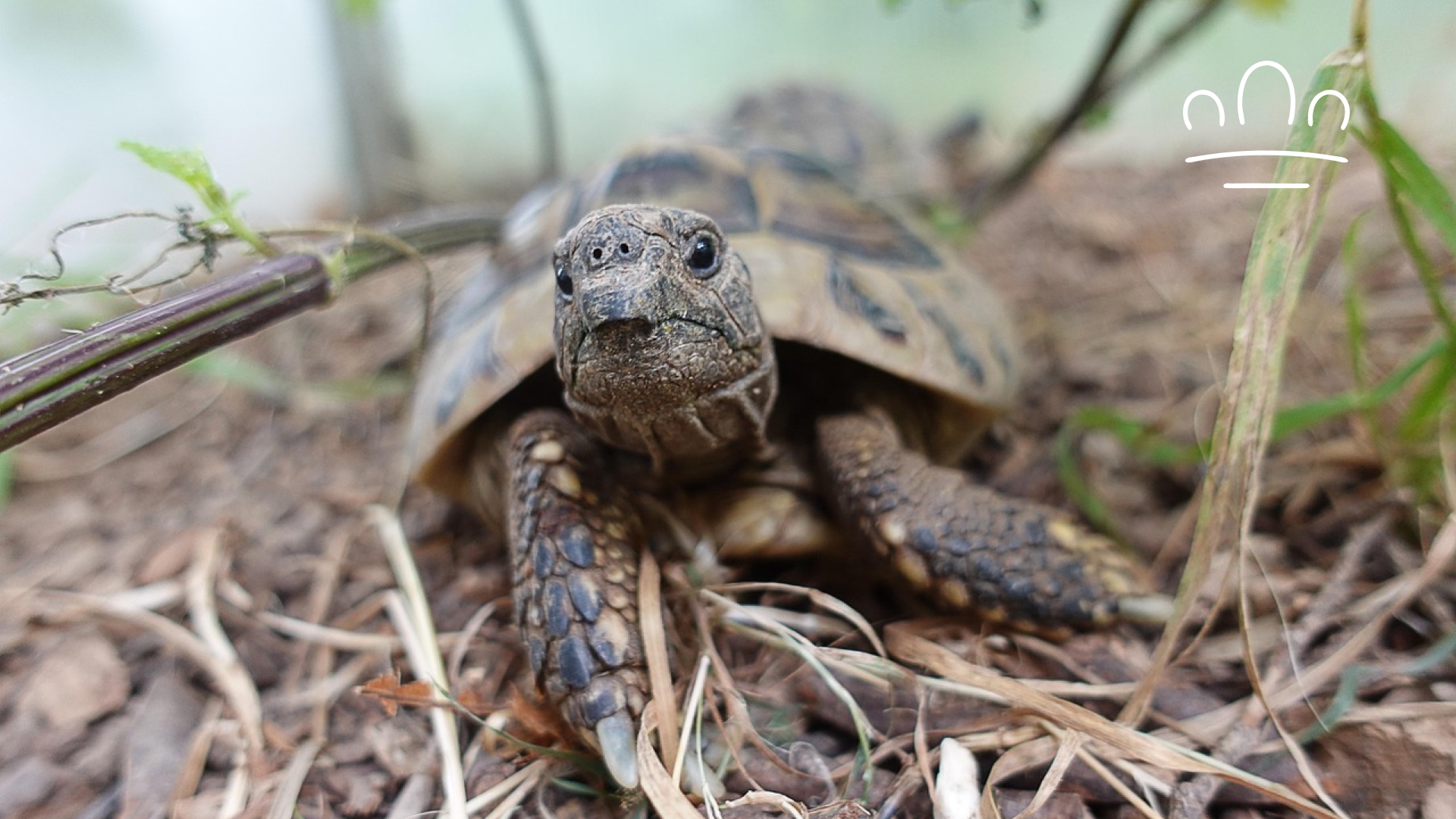
A baby turtle can look like a very simple pet.
It is small. It moves slowly. It does not bark, scratch the sofa, or wake the neighbors by learning the same whistle for six weeks.
Then you begin researching tanks, filters, basking areas, UVB lighting, heating, water quality, adult size, diet, hygiene, veterinary care, and lifespan.
The turtle has not become more complicated. You have simply discovered the turtle.
Different pet turtle species vary considerably in adult size, activity, swimming ability, habitat, diet, confidence, and care requirements. A musk turtle does not need exactly the same setup as a red-eared slider. A map turtle is not simply a painted turtle with a different shell pattern.
So, which pet turtle species best matches your zodiac sign?
This guide pairs all 12 zodiac signs with several freshwater turtle species based on broad personality themes. It is playful astrology, not a scientific method for choosing a reptile.
The animal’s adult size, health, legal status, environmental requirements, lifespan, and individual behavior matter far more than your birth chart.
Still, it can be entertaining to learn whether the stars imagine you with an active slider, an observant musk turtle, or an African sideneck who appears to be quietly evaluating your enclosure maintenance.
Want a personal horoscope for your turtle?
Choose “Other pet” in the Pet-Scope Pet Horoscope Generator, enter your turtle’s species, add a few personality notes, and create a playful zodiac-style reading for your shelled companion.
How to Choose the Right Pet Turtle Species for Your Lifestyle
Your zodiac sign may suggest that you are patient, curious, energetic, routine-oriented, or attracted to unusual animals.
Those traits can be fun to compare with turtle behavior. However, choosing a turtle is primarily a question of husbandry.
Before bringing one home, consider:
- The turtle’s expected adult size
- The size of the enclosure it will need as an adult
- Water depth, swimming space, and a completely dry basking area
- Water temperature and basking temperature
- Correct UVB lighting and regular bulb replacement
- A powerful filtration system and frequent water-quality checks
- The species-specific diet and calcium requirements
- The cost of electricity, equipment, food, and veterinary care
- Whether an experienced reptile veterinarian is available nearby
- The turtle’s potentially long lifespan
- Whether the species is legal to buy, keep, or sell where you live
- Safe hygiene because reptiles can carry Salmonella
The American Veterinary Medical Association’s guide to selecting a pet reptile explains that reptiles require careful attention to habitat, diet, handling, and specialist care.
The RSPCA terrapin-care guide covers tank size, water and dry areas, heating, lighting, filtration, diet, and everyday care.
A hatchling may fit comfortably in your hand. That tells you very little about the space the adult animal will need.
With the practical warning covered, let’s ask the zodiac.
Best Pet Turtles for Aries: Active and Confident Species
Aries dates: March 21–April 19
Aries is energetic, bold, impatient, and happiest when there is visible activity.
An active, confident turtle may suit this fire sign better than a particularly shy species that disappears whenever someone enters the room.
Top Aries turtle matches
Red-eared slider: Active, alert, strong-swimming, and usually very interested in food. Red-eared sliders grow much larger than many new owners expect and require substantial housing, filtration, heat, and UVB lighting. They are also restricted or regulated in some regions because of their invasive impact.
Painted turtle: An active basking turtle with attractive shell markings and plenty of swimming behavior to observe. Availability and ownership rules vary by location.
Map turtle: Alert, active, and often slightly more cautious than a bold slider. Map turtles require excellent water quality and a carefully designed aquatic setup.
Aries match in a sentence: A turtle who begins swimming toward dinner before Aries has finished opening the container.
Best Pet Turtles for Taurus: Steady and Routine-Loving Matches
Taurus dates: April 20–May 20
Taurus values predictable routines, comfort, good food, and an environment that does not change unnecessarily.
A turtle with steady daily patterns may feel naturally compatible with this earth sign.
Top Taurus turtle matches
Common musk turtle: Relatively compact compared with many sliders, although still requiring a proper aquatic enclosure, filtration, heating, UVB, hiding places, and suitable water depth.
Eastern mud turtle: A smaller turtle associated with slower water and time spent exploring the bottom. Care must still be based on the exact species and individual animal.
African sideneck turtle: Distinctive, often curious, and generally more substantial than its juvenile appearance suggests. It needs warm water, a dry basking area, appropriate lighting, and generous adult housing.
Taurus match in a sentence: A turtle who understands that a reliable basking spot and a punctual meal are the foundations of civilization.
Best Pet Turtles for Gemini: Curious and Observant Species
Gemini dates: May 21–June 20
Gemini is curious, adaptable, mentally active, and easily fascinated by changing behavior.
A turtle that swims, explores, basks, investigates objects, and responds visibly to routines can provide more interest than people expect from a reptile.
Top Gemini turtle matches
Map turtle: Active, visually distinctive, and interesting to observe both in the water and while basking.
Painted turtle: A lively swimmer and frequent basker when the environment is set up correctly.
Common musk turtle: Often spends time exploring the lower part of the enclosure, climbing over objects, and investigating food.
Gemini match in a sentence: A turtle who has inspected the filter, moved behind the wood, surfaced for air, and changed direction before Gemini finishes explaining the first observation.
Best Pet Turtles for Cancer: Familiar Routines and Quiet Companionship
Cancer dates: June 21–July 22
Cancer is nurturing, protective, sensitive, and strongly attached to the home environment.
A turtle can suit Cancer when the owner enjoys caring for a carefully maintained habitat and observing gradual changes in behavior and trust.
Top Cancer turtle matches
African sideneck turtle: Often curious and responsive to activity around the enclosure. Its unusual neck movement and expressive-looking face can make it especially engaging to observe.
Common musk turtle: A quieter, bottom-exploring species that may appeal to Cancer’s preference for subtle companionship.
Painted turtle: Visibly active and often easy to observe once comfortable in a suitable enclosure.
Cancer match in a sentence: A turtle whose routines slowly become part of the emotional rhythm of the home.
Best Pet Turtles for Leo: Distinctive Turtles With Visible Presence
Leo dates: July 23–August 22
Leo is confident, expressive, warm, and generally attracted to animals with visible personality.
A striking or particularly active turtle may appeal to this fire sign.
Top Leo turtle matches
Painted turtle: Named for its colorful markings and often highly visible while basking or swimming.
Red-eared slider: Active, bold, food-aware, and difficult to ignore once it reaches adult size. The owner must plan for that adult size from the beginning.
African sideneck turtle: Distinctive in appearance and behavior, with more individual presence than many first-time reptile owners expect.
Leo match in a sentence: A turtle who climbs onto the basking platform as though the lamp were installed specifically for their entrance.
Best Pet Turtles for Virgo: Detail-Oriented Owners and Precise Care
Virgo dates: August 23–September 22
Virgo is practical, observant, organized, and generally good at maintaining routines.
Those qualities are valuable in turtle care, where temperature, lighting, water quality, filtration, appetite, shell condition, and behavior all deserve regular attention.
Top Virgo turtle matches
Map turtle: A species that benefits from excellent water quality, appropriate basking conditions, and careful monitoring.
Common musk turtle: Compact by turtle standards and behaviorally interesting, but still dependent on a well-designed aquatic environment.
Painted turtle: Active enough to make changes in appetite, swimming, and basking behavior easier to observe.
Virgo match in a sentence: A turtle whose water temperature, basking temperature, UVB schedule, filter flow, and feeding record have all been checked without unnecessary drama.
Best Pet Turtles for Libra: Balanced and Attractive Aquatic Matches
Libra dates: September 23–October 22
Libra values harmony, balance, beauty, and an environment that feels thoughtfully arranged.
A visually distinctive turtle in a well-designed naturalistic enclosure may strongly appeal to this air sign.
Top Libra turtle matches
Painted turtle: Attractive shell markings and a pleasing balance between swimming and basking behavior.
Map turtle: Distinctive patterning and an active but sometimes cautious personality.
African sideneck turtle: An unusual appearance and engaging presence that can become the focus of a carefully maintained setup.
Libra match in a sentence: A turtle living in a beautiful enclosure that still prioritizes welfare over interior decoration.
Best Pet Turtles for Scorpio: Private and Observant Species
Scorpio dates: October 23–November 21
Scorpio values privacy, boundaries, trust, and relationships that develop slowly.
A turtle who prefers observation to constant handling is almost suspiciously appropriate.
Top Scorpio turtle matches
Common musk turtle: Often less interested in permanent display and more interested in exploring the bottom, hiding, climbing, and appearing when it chooses.
Eastern mud turtle: A private, semi-aquatic species whose care should be planned around its exact natural habitat and environmental requirements.
African sideneck turtle: Curious but distinctive, with behavior that becomes more interesting through patient observation.
Scorpio match in a sentence: A turtle who reveals its full routine only after deciding the observer can be trusted.
Best Pet Turtles for Sagittarius: Active and Exploratory Matches
Sagittarius dates: November 22–December 21
Sagittarius is adventurous, curious, active, and fascinated by exploration.
A strong swimmer with a large, varied enclosure may suit this fire sign—provided Sagittarius maintains the less exciting daily routines too.
Top Sagittarius turtle matches
Red-eared slider: Active, strong-swimming, curious, and capable of using a large aquatic environment fully.
Map turtle: An alert swimmer and basker who can provide plenty of behavior to observe.
Painted turtle: Active in water and on the basking area, with a daily rhythm that feels visibly dynamic.
Sagittarius match in a sentence: A turtle who sees the entire tank as territory to be explored rather than an object to sit inside.
Best Pet Turtles for Capricorn: Long-Term and Dependable Companions
Capricorn dates: December 22–January 19
Capricorn is patient, responsible, realistic, and usually capable of understanding that animal care continues long after the novelty disappears.
This is essential with turtles, many of which can live for decades.
Top Capricorn turtle matches
Common musk turtle: A relatively compact species that still rewards careful, consistent, long-term husbandry.
Painted turtle: A substantial commitment requiring enough space, filtration, heating, lighting, and regular maintenance.
Red-eared slider: Included only for a Capricorn fully prepared for adult size, equipment costs, legal considerations, and decades of care.
Capricorn match in a sentence: A turtle whose care plan includes the adult enclosure, future veterinary needs, and several years nobody else remembered to consider.
Best Pet Turtles for Aquarius: Unusual and Fascinating Species
Aquarius dates: January 20–February 18
Aquarius is curious, independent, unconventional, and interested in animals whose behavior is frequently misunderstood.
A less obvious species may appeal more than the turtle most commonly seen in shops.
Top Aquarius turtle matches
African sideneck turtle: Distinctive anatomy, engaging behavior, and care requirements that reward proper research.
Common musk turtle: Small by turtle standards, bottom-oriented, capable of climbing, and more behaviorally interesting than its quiet public image suggests.
Map turtle: Visually unusual and active, with species and sex differences that can significantly affect adult size.
Aquarius match in a sentence: A turtle whose natural behavior becomes more fascinating each time the owner realizes the original explanation was incomplete.
Best Pet Turtles for Pisces: Quiet and Gentle Companionship
Pisces dates: February 19–March 20
Pisces is compassionate, observant, gentle, and often comfortable with relationships that do not require constant physical affection.
A quieter turtle may suit someone who enjoys watching, maintaining a beautiful habitat, and noticing gradual patterns.
Top Pisces turtle matches
Common musk turtle: A subtle, observant match for an owner who enjoys calm interaction and bottom-level exploration.
African sideneck turtle: Curious and visually expressive, with enough individual presence to create a meaningful observational bond.
Eastern mud turtle: A smaller, quieter species that may appeal symbolically to Pisces, provided its exact environmental needs can be met.
Pisces match in a sentence: A turtle who proves that companionship does not always need noise, cuddling, or constant attention.
Are you and your turtle astrologically compatible?
Compare your zodiac sign with your turtle’s sign and discover where your personalities connect—and where your shelled companion may continue at an entirely different speed.
What Are the Best Turtle Species to Keep as Pets?
There is no universally best turtle species.
A suitable choice depends on:
- Legal availability in your region
- Adult size
- Your experience with reptiles
- The enclosure space you can provide
- Equipment and electricity costs
- Access to reptile veterinary care
- Your ability to maintain water quality
- The animal’s lifespan
Common musk turtles are relatively compact, but they are not suitable for tiny tanks. Red-eared sliders are widely recognized but grow large and are invasive or regulated in many places. Map turtles can have significant differences in adult size depending on species and sex.
Never buy a turtle simply because a seller says it “stays small.” Ask for the scientific species name and research the adult animal, not the hatchling in front of you.
Does Turtle Species Predict Personality?
Species can suggest broad patterns in activity, swimming, basking, confidence, feeding, and habitat use.
It cannot reliably predict the personality of an individual turtle.
Behavior is also influenced by:
- Temperature and lighting
- Water quality
- Health and pain
- Age and sex
- Previous handling
- Available hiding places
- Enclosure size
- Whether the turtle feels exposed or secure
- Feeding routines
A turtle that hides constantly may not have a shy personality. It may feel unsafe, be too cold, be unwell, or lack suitable cover.
Environment and health should be checked before a behavior is treated as personality.
How Large Should a Pet Turtle Tank Be?
Large enough for the adult turtle—not only the animal you bring home today.
An aquatic turtle needs space to swim, turn, dive, surface easily, explore, and leave the water completely to bask.
The enclosure also needs room for:
- A powerful filter
- A heater protected from damage
- A secure basking platform
- Heat and UVB lamps
- Thermometers
- Species-appropriate cover and enrichment
- Safe access for cleaning and maintenance
Do not assume a turtle will remain small because its tank is small. Restricted housing causes poor welfare; it does not safely control growth.
Why Do Pet Turtles Need UVB Light and Heat?
Turtles are ectothermic. They depend on their environment to regulate body temperature and support normal digestion, activity, and metabolism.
Many commonly kept species also need appropriate UVB exposure to support vitamin D synthesis and calcium metabolism.
A window is not an adequate substitute for a correctly installed UVB lamp because ordinary glass blocks much of the useful UVB radiation.
Bulbs must be positioned at a suitable distance, replaced according to manufacturer guidance, and used alongside a safe basking heat source.
Exact requirements vary by species. Copying a setup made for a different reptile is not enough.
Why Is Water Quality Important for Aquatic Turtles?
Aquatic turtles eat, swim, and produce waste in the same water.
This makes filtration and regular maintenance essential.
Poor water quality can contribute to eye irritation, skin and shell problems, unpleasant odors, and an unhealthy environment.
A powerful filter helps, but it does not eliminate the need for partial water changes, cleaning, and testing.
The turtle is not a decorative object placed inside a fish tank.
The water is part of its living environment and must be maintained accordingly.
Can Pet Turtles Live Together?
Sometimes turtles appear to tolerate one another. That does not necessarily mean they benefit from sharing an enclosure.
Turtles may compete for:
- The best basking location
- Food
- Hiding places
- Swimming space
- Access to heat and light
A larger or more confident animal may quietly prevent another turtle from using essential resources. Aggression can include chasing, biting, climbing on top of another turtle, or repeatedly pushing it away.
Separate housing should always be available if turtles show stress, injury, competition, or aggression.
Are Pet Turtles Safe for Children?
A turtle should not be treated as a child’s low-maintenance pet.
The enclosure, equipment, water maintenance, feeding, hygiene, and veterinary care require consistent adult responsibility.
Reptiles can carry Salmonella even when they appear healthy. Everyone should wash their hands after touching the turtle, its water, equipment, food dishes, or enclosure.
Do not clean turtle equipment in areas used for food preparation. Young children and people with weakened immune systems may face greater risk and need additional precautions.
The AVMA provides guidance on reptiles, other pets, and Salmonella prevention.
Should You Adopt a Rescue Turtle?
A rescue turtle can be a good option for an experienced and properly prepared home.
Many turtles are surrendered after outgrowing their original tanks or when owners discover how long and demanding their care can be.
A reputable rescue may help you understand:
- The exact or likely species
- Approximate age and sex
- Adult size expectations
- Previous housing
- Diet and feeding behavior
- Known shell or health problems
- Behavior around people or other turtles
- The enclosure and equipment required
Never release an unwanted pet turtle into the wild.
It may die, spread disease, or survive and damage native wildlife. Contact a reptile rescue, animal-welfare organization, or relevant local authority instead.
Explore All 12 Turtle Zodiac Sign Personalities
Already share your home with a turtle? Their own zodiac sign may offer a more entertaining explanation for their basking habits and dinner schedule.
Visit our complete Turtle Zodiac Signs guide to explore Aries, Taurus, Gemini, Cancer, Leo, Virgo, Libra, Scorpio, Sagittarius, Capricorn, Aquarius, and Pisces turtle personalities.
The Pet-scope Take
Aries may enjoy an active slider. Taurus may appreciate the steady routines of a musk turtle. Gemini could become fascinated by an alert map turtle, while Aquarius chooses an African sideneck because an ordinary explanation would be too easy.
But the best turtle is not simply the species assigned to your zodiac sign.
It is the individual animal whose adult size, lifespan, habitat, diet, legal status, equipment, health, and environmental needs fit the care you can consistently provide.
Use astrology to explore the possibilities.
Then use serious research, correct husbandry, and advice from an experienced reptile veterinarian to make the decision.
The turtle may move slowly.
The commitment does not.
Disclaimer
This article is intended for entertainment and general informational purposes only. Zodiac signs and general species descriptions should not be used as the main basis for choosing, purchasing, or adopting a turtle. Adult size, lifespan, legal status, enclosure dimensions, water quality, filtration, heat, UVB lighting, diet, hygiene, individual health, and access to experienced reptile veterinary care matter far more. Research the exact species carefully before bringing a turtle home, and never release a pet turtle into the wild.